
 en
en
Information protection accompanying every step of life
Follow OHMIEX Intelligence for more valuable information to know early

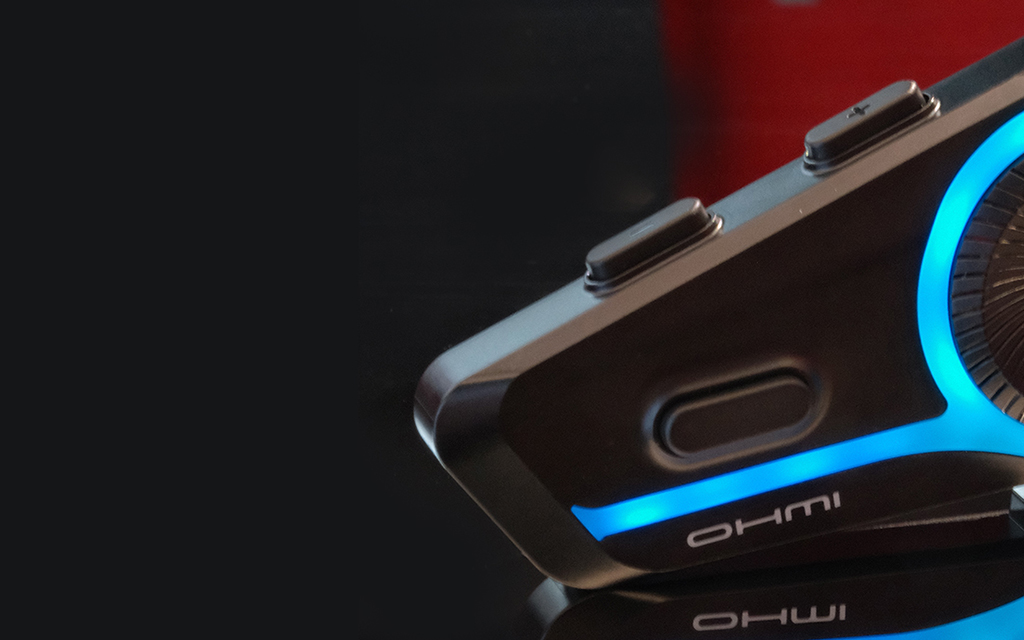
Follow OHMIEX Intelligence for more valuable information to know early
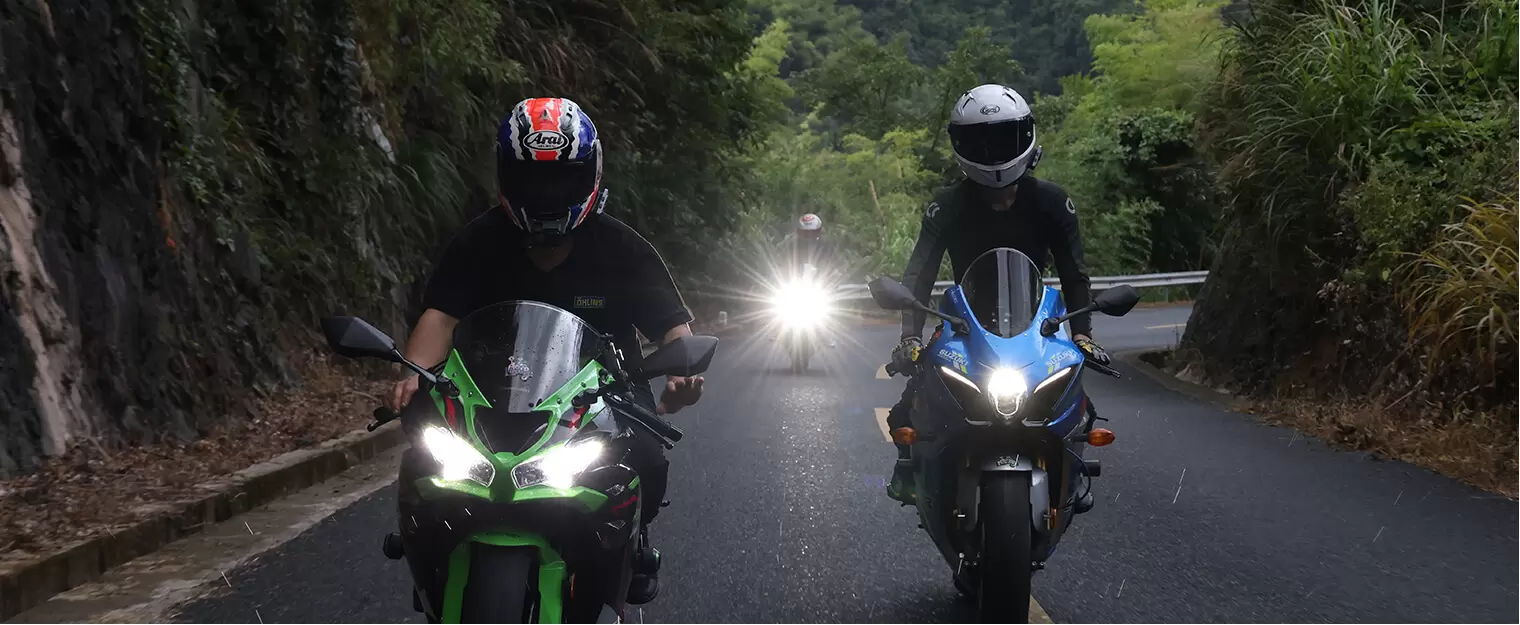
When distributors source motorcycle Bluetooth intercoms, product specifications are usually the first place they look.
Bluetooth version. Communication range. Battery capacity. Speaker size. Waterproof rating.
These specifications are important, but they only tell part of the story.
A motorcycle intercom is not used in a quiet office or a controlled laboratory. It is mounted inside a moving helmet and exposed to wind, rain, vibration, road noise, temperature changes, and constant movement. A product that looks impressive on a datasheet may still disappoint riders if its microphone performs poorly at highway speeds, its connection becomes unstable on rough roads, or its mounting system loosens after repeated use.
For retailers and distributors, the difference between specification performance and real-world performance can become a business issue.
Poor performance can lead to customer complaints, product returns, replacement requests, negative reviews, and additional after-sales costs.
So, instead of asking only, "What Bluetooth version does this intercom use?" distributors should also ask:
"How reliably will this product perform when customers actually take it onto the road?"
This distinction is particularly important in demanding riding environments such as coastal areas, where sudden rain, strong winds, road spray, and rough riding conditions can quickly expose weaknesses in an intercom's design.

Bluetooth specifications provide useful information when comparing motorcycle intercoms.
A newer Bluetooth version may offer improvements in connectivity, efficiency, and overall wireless performance. A longer advertised communication range may also be attractive to riders who participate in group rides or touring.
But these numbers do not automatically guarantee a better riding experience.
Consider communication range as an example.
A manufacturer may state a maximum range under favorable conditions. On the road, however, actual communication can be influenced by terrain, obstacles, rider positioning, electromagnetic interference, helmet construction, device orientation, and riding conditions.
The same principle applies to other specifications.
A larger battery does not automatically guarantee longer practical operating time. A high-quality speaker does not compensate for excessive wind noise entering through the microphone. A modern Bluetooth chipset cannot solve every problem associated with poor antenna design or unstable firmware.
For procurement teams, this means specifications should be treated as evaluation points rather than the final purchasing decision.
Motorcycle riding creates a combination of environmental and mechanical stresses that consumer electronics do not normally experience.
During a typical ride, an intercom may encounter:
Strong headwinds and crosswinds
Continuous road vibration
Sudden rain and road spray
High ambient noise
Repeated helmet movement
Temperature and humidity changes
Long periods of continuous operation
Rough or uneven road surfaces
These conditions affect different parts of the intercom system.
Rain can challenge environmental protection. Wind can overwhelm microphone input. Vibration can affect mechanical connections and mounting systems. Long rides can expose limitations in battery performance. Repeated use can reveal weaknesses that are not apparent during a short product demonstration.
This is why a good motorcycle intercom should be evaluated as a complete system, not simply as a collection of specifications.
Water resistance is one of the first factors distributors should examine when selecting a motorcycle helmet intercom.
Riders can encounter more than direct rainfall. Road spray from vehicles, water around the helmet, and wet conditions after a storm can all expose external components to moisture.
The important question is therefore not simply whether a product is described as "waterproof."
Distributors should determine:
What is the actual IP rating?
What type of exposure is the rating intended to address?
Are external interfaces protected?
Is the product designed for rain and road splashes?
What environmental testing is performed?
Is water-resistance performance maintained consistently across production batches?
For example, the OHMIEX C1 Smart Motorcycle Helmet Bluetooth Headset carries an IPX5 rating and is positioned for applications including light rain, road splashes, and wet-road riding.
This is more useful to a distributor than a generic waterproof claim because it provides a defined reference point when assessing whether the product matches the intended market.
The key takeaway is simple:
Water resistance should be evaluated according to real riding conditions, not just marketing terminology.

Motorcycles are inherently noisy environments.
At urban speeds, many intercoms can provide an acceptable audio experience. Once riders accelerate onto highways, however, aerodynamic noise increases significantly.
This creates a challenge for both communication and voice pickup.
A rider may be able to hear music clearly but struggle to communicate with another rider. A microphone that works well when stationary may pick up excessive wind noise at speed. A passenger may sound distorted or difficult to understand.
This is why distributors should evaluate communication clarity, rather than simply maximum speaker volume.
Effective performance depends on several factors, including:
Microphone positioning
Microphone design
Acoustic isolation
Wind-noise reduction
Signal processing
Speaker performance
Helmet configuration
The OHMIEX C1, for instance, incorporates wind-noise reduction designed to support communication during high-speed riding and uses a 40 mm Hi-Fi speaker system.
The value of these features is not simply that they look good on a product specification sheet. Their purpose is to address a practical problem: maintaining intelligible audio within a noisy riding environment.
Speakers receive most of the attention in many product comparisons, but the microphone is equally important.
An intercom is fundamentally a two-way communication device. If the microphone cannot reliably capture the rider's voice, high-quality speakers and a strong Bluetooth connection cannot solve the problem.
Microphone performance can be affected by:
Wind turbulence
Moisture
Position relative to the rider's mouth
Helmet structure
Cable movement
Mechanical vibration
Connector quality
Different helmet designs may also require different microphone configurations.
The OHMIEX C1 uses interchangeable microphone options, including a flexible cord microphone and a rigid stick microphone. This gives distributors and riders more flexibility when adapting the headset to different helmet structures.
When assessing an intercom supplier, it is therefore useful to ask not only, "What microphone does the product use?"
A better question is:
"How does the microphone perform when the rider is moving at speed in a real helmet?"
That distinction separates laboratory performance from practical riding performance.
Bluetooth version is one of the easiest specifications to compare.
Connection stability is considerably more complex.
For example, Bluetooth 5.3 is a useful specification, but the Bluetooth version alone does not determine the quality of the final communication experience.
Actual performance can also depend on:
Chipset implementation
Antenna design
Firmware
Power management
Signal processing
Interference handling
Device orientation
Physical construction
Motorcycle riding adds another variable: continuous movement.
The rider's head moves. The helmet moves. The motorcycle vibrates. Other electronic equipment may be operating nearby.
For distributors, this means a product should not be evaluated solely on whether it uses Bluetooth 5.0, Bluetooth 5.2, Bluetooth 5.3, or another version.
The more meaningful question is whether the complete wireless system remains stable during actual use.
The OHMIEX C1 uses Bluetooth 5.3 and supports two-rider intercom communication, with a stated communication range of approximately 500–1000 meters depending on conditions.
These specifications provide a useful basis for product comparison, but real-world testing remains important when evaluating expected performance in a specific market.
Not every intercom return is caused by an electronic problem.
Sometimes, the issue is mechanical.
A motorcycle helmet is constantly exposed to movement and vibration. Rough roads can increase these forces, while repeated installation and removal can place additional stress on the mounting system.
If an intercom becomes loose, several problems can follow.
The device may move out of the ideal position. The speaker may no longer align properly with the rider's ear. The microphone position may change. The rider may also lose confidence in the security of the device.
A good mounting system should therefore be considered part of the overall product performance.
Distributors should evaluate:
Mounting strength
Helmet compatibility
Installation method
Vibration resistance
Ease of installation
Ease of removal
Long-term mechanical stability
The OHMIEX C1 uses a universal clip-on helmet mount, providing a practical installation approach for different helmet configurations.
For retailers, this type of design consideration can help reduce complaints that have nothing to do with Bluetooth technology itself.
A motorcycle Bluetooth intercom is more than a Bluetooth chipset connected to a speaker.
The final listening experience depends on the interaction between hardware, acoustic design, microphone input, signal processing, and software.
Speaker size is useful information, but it should not be considered in isolation.
The acoustic system also needs to work within the physical constraints of a motorcycle helmet.
For riders, typical use cases may include:
Rider-to-rider communication
Passenger communication
Navigation instructions
Music playback
Phone calls
Long-distance touring
Each use case places slightly different demands on the audio system.
For distributors, this is why product evaluation should include actual listening and communication tests rather than relying entirely on speaker specifications.
A headset that sounds good in a quiet showroom may behave differently once it is installed inside a helmet at highway speed.
Battery capacity is another specification that can be misleading when viewed on its own.
A large battery may appear attractive, but actual operating time depends on the complete system.
Bluetooth connectivity, speaker output, intercom use, music playback, firmware, and power management can all influence energy consumption.
Riding duration also matters.
A commuter may use an intercom for a relatively short period each day. A touring rider may expect continuous operation for several hours.
Distributors should therefore ask:
What is the expected operating time?
Under what usage conditions was it measured?
How does continuous intercom communication affect battery life?
How does music playback affect operating time?
How does temperature affect battery performance?
Is battery performance consistent across production batches?
The objective is not simply to find the intercom with the largest battery.
It is to identify a product whose battery performance is appropriate for the intended application and customer expectations.
One of the most important factors is also one of the easiest to overlook.
Can the supplier reproduce the same performance from one production batch to the next?
A sample may perform well during testing.
But distributors do not sell one sample.
They purchase production quantities.
If different batches show inconsistent microphone performance, speaker output, Bluetooth stability, battery life, or mechanical quality, retailers may begin receiving inconsistent customer feedback.
This is especially problematic because customers generally expect every unit carrying the same model number to perform in a similar way.
When evaluating a supplier, distributors should therefore examine:
Incoming material inspection
Component quality control
Assembly processes
Functional testing
Acoustic testing
Bluetooth testing
Environmental protection checks
Final inspection
Batch traceability
A capable supplier should be able to demonstrate not only that a product works, but also that its production process is designed to maintain consistent quality.
For B2B buyers, this can be more valuable than one impressive prototype.
The connection between product performance and return rates is straightforward.
Consider a rider who purchases an intercom for touring.
After several rides, the rider notices excessive wind noise. During a rainy trip, the microphone begins to perform inconsistently. A few days later, the device loses connection intermittently.
The customer may decide that the product is defective.
The retailer then becomes responsible for the next steps:
Customer complaint → Return request → Product inspection → Replacement or refund → Additional shipping → Inventory handling
There may also be a negative review.
For distributors, the cost is therefore not limited to the original unit.
Additional costs can include:
Customer service time
Return shipping
Replacement inventory
Warranty processing
Marketplace penalties or service costs
Negative customer reviews
Lost repeat business
Additional distributor support
This is why the cheapest unit price does not necessarily produce the lowest overall procurement cost.
Reliability can be a cost-control strategy.
Before committing to a large order, distributors can use a practical evaluation framework.
Instead of asking only for a product datasheet, consider asking suppliers the following questions:
What conditions is the intercom designed for, and what is its verified water-resistance rating?
How is wind noise addressed, and has the microphone been evaluated during high-speed riding?
What Bluetooth platform is used, and how is connection stability evaluated under real-world conditions?
How is the headset mounted to the helmet, and how does the mounting system handle vibration and repeated use?
What operating conditions are used to determine battery life?
What functional, acoustic, environmental, and final inspection procedures are performed?
How does the supplier ensure that mass-production units maintain the performance demonstrated by samples?
Can the supplier provide product customization, technical communication, and after-sales support when distributors enter new markets?
The quality of these answers can tell a procurement team a great deal about the supplier's engineering and quality-control approach.
OHMIEX develops motorcycle helmet Bluetooth headsets with a focus on practical riding applications, combining wireless communication with considerations such as audio performance, mounting flexibility, environmental protection, and ease of use.
Its product range includes the OHMIEX D9 Smart Helmet Bluetooth Headset and OHMIEX C1 Smart Motorcycle Helmet Bluetooth Headset, providing options for different riding and communication requirements.
The C1, for example, combines Bluetooth 5.3, two-rider intercom communication, IPX5 protection, a 40 mm Hi-Fi speaker, flexible and rigid microphone options, and a universal clip-on helmet mounting system.
These specifications are useful for distributors comparing products, but they are most meaningful when considered as part of the complete riding experience.
The objective is not to claim that one specification solves every challenge.
Instead, it is to recognize that a reliable motorcycle intercom requires multiple systems to work together: wireless connectivity, acoustic components, microphone design, environmental protection, mechanical structure, battery management, and quality control.
That is also why evaluating a supplier should go beyond the product datasheet.

Bluetooth technology continues to evolve, and newer specifications can provide genuine technical benefits.
But for motorcycle intercoms, newer does not automatically mean better in every real-world situation.
A rider does not purchase an intercom simply to own a particular Bluetooth version.
They purchase it because they want to communicate, listen to audio, follow navigation, or stay connected while riding.
That means the final customer experience depends on what happens after the helmet leaves the store.
Can the rider hear clearly at highway speed?
Can the microphone capture their voice?
Can the connection remain stable?
Can the headset handle rain and road spray appropriate to its intended use?
Does the mount stay secure on rough roads?
Does the battery meet the expected riding duration?
And, perhaps most importantly for distributors, will the next production batch perform as consistently as the first?
These are the questions that specifications alone cannot answer.
For distributors and retailers, motorcycle intercom sourcing should not be reduced to a comparison of Bluetooth versions, advertised range, battery capacity, or price.
Those specifications provide an important starting point.
But the real evaluation begins when the product is installed inside a helmet and exposed to the conditions riders actually experience:
Wind. Rain. Vibration. Road noise. Speed. Movement. Long-distance use.
That is where the difference between a specification-driven product and a performance-driven product becomes clear.
For retailers, reliable performance can mean fewer complaints, fewer returns, lower after-sales costs, and greater confidence in the products they recommend.
For distributors, it can also mean more consistent customer experiences across different markets and riding environments.
Ultimately, the most important question is not:
"How impressive is this motorcycle intercom on paper?"
It is:
"How reliably does it perform when the rider is actually on the road?"
For that reason, distributors should evaluate motorcycle Bluetooth intercoms based not only on their Bluetooth specifications, but on the complete combination of wireless stability, acoustic performance, environmental protection, structural durability, battery performance, and production consistency.
Because in the real world, performance matters more than specifications alone.


 Email
Email WhatsApp