
 en
en
Information protection accompanying every step of life
Follow OHMIEX Intelligence for more valuable information to know early

Follow OHMIEX Intelligence for more valuable information to know early
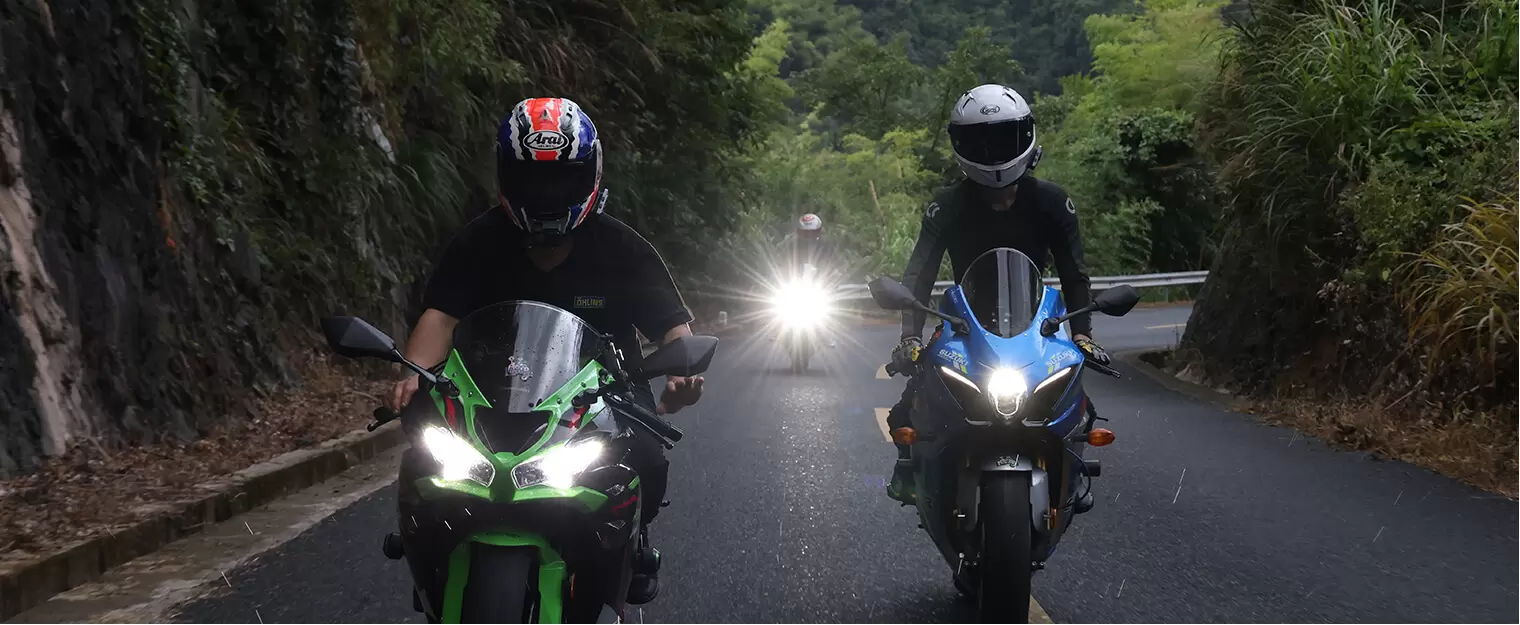
I've worked in motorcycle gear wholesale for years, so I've spent a lot of time looking at helmet intercom specifications, comparing product features, and discussing product positioning with dealers.
But I only really understood what riders need from a motorcycle intercom after I started commuting on a motorcycle every day.
Once you use these products on real roads, the differences become much easier to understand.
Over the years, I've personally tested a wide range of mainstream motorcycle intercoms across the $80–$500 price bracket, covering different product categories, communication configurations, and riding scenarios.
I tested them on highways, city roads, mountain routes, and open roads. I also experienced both two-rider and multi-rider communication in actual riding environments.
The biggest lesson was not that one product is universally better than another.
It was much simpler:
Different riders need different types of motorcycle intercoms.
A daily commuter may not need a six-rider group communication system. A motorcycle club, on the other hand, can quickly outgrow a basic two-way headset.
For motorcycle distributors and dealers, this creates an important question:
Why stock only one intercom model when your customers have completely different riding needs?
This is one of the reasons we developed two clearly positioned OHMIEX headset lines: the OHMIEX C1 Smart Motorcycle Helmet Bluetooth Headset for practical 1–2 rider communication and the OHMIEX D9 Smart Helmet Bluetooth Headset for riders who need 4–6 rider group communication.

Before talking about our own products, it is worth explaining where this perspective comes from.
I've personally tested a wide range of mainstream motorcycle intercoms across the $80–$500 price bracket.
The purpose wasn't simply to compare which product had the longest feature list.
Instead, I wanted to understand what actually happens when different motorcycle helmet intercoms are used on real roads.
The tests covered different riding environments, including:
Highways
Urban roads
Mountain roads
Open-road environments
Daily commuting
Two-rider communication
Multi-rider group riding
This experience changed the way I think about motorcycle intercom selection.
A headset can have more features, support more riders, or sit at a higher price point without necessarily being the right product for every customer.
The real question should be:
What does this rider actually need during a real ride?
For a commuter riding to work every day, the answer can be very different from that of a six-person motorcycle group traveling long distances.
One of the most useful lessons came from riding with a multi-rider intercom while riding with one other person.
On paper, having extensive group communication capabilities sounds attractive.
But after riding for about an hour, the practical difference became obvious.
Many of the advanced group communication functions simply weren't being used.
For a rider who normally:
Commutes alone
Rides with a spouse or partner
Rides with one friend
Uses navigation regularly
Takes phone calls while riding
Makes relatively short daily trips
a multi-rider intercom can provide more functionality than necessary.
There is also a cost consideration.
If a rider only needs two-person communication, they may not want to pay extra for group-oriented functions that they rarely use.
This is an important distinction for dealers.
More features do not automatically mean more value.
For some customers, value means having the functions they actually use in a practical and easy-to-manage product.
This is where the OHMIEX C1 Smart Motorcycle Helmet Bluetooth Headset fits into our product lineup.
C1 is positioned around everyday riding and 1–2 rider communication rather than trying to make every customer buy a group-oriented headset.
Its communication configuration is designed for two riders, making it a practical option for daily commuters, couples, friends, and riders who normally travel alone but still want reliable communication when riding with another person.
Our real-world testing produced useful results.
Intercom runtime: approximately 39 hours
Intercom + music: approximately 24 hours
Tested communication distance: approximately 600 m
Highest tested riding speed: 100 km/h
Road environments: highways, urban roads, and mountain roads
Voice communication: good clarity during testing
Continuous wearing: approximately 1–2 hours during testing
All real-world test figures are obtained under specific test environments. Actual performance will vary due to terrain, obstacles, traffic density, riding speed and weather conditions. Data should be used for reference only, not as a guaranteed specification.
The approximately 600 m communication distance is therefore best understood as a real-world test reference, rather than a guaranteed communication range for every riding environment.
That distinction matters because motorcycle intercom performance is ultimately influenced by what is happening around the riders.

Imagine a customer walking into a motorcycle shop and saying:
"I normally ride with my wife. We don't need six-person communication."
There is little reason to push that customer toward a product designed primarily around large group rides.
The same applies to commuters who ride alone most of the time and only occasionally communicate with another rider.
For these customers, an intercom should be:
Practical
Easy to use
Comfortable for daily riding
Reliable in normal riding conditions
Long-lasting enough for regular use
Appropriate for their actual communication needs
That's the positioning behind C1.
It isn't about removing useful functions. It is about matching the product to the actual riding scenario.
The situation was completely different when I joined a group ride with several other riders.
This time, a basic two-way intercom was not enough.
Once the riding group became larger, we needed more than one-to-one communication.
Wind noise also became more noticeable at speed, while the communication setup could not connect the entire group together.
This is where the limitations of a simple two-rider intercom become obvious.
A two-rider headset can be perfectly reasonable for two people.
But when four, five, or six riders are traveling together, the communication requirement changes completely.
You need a product designed around group communication.
That is where the OHMIEX D9 Smart Helmet Bluetooth Headset enters the picture.
D9 is positioned for motorcycle clubs, touring groups, and riders who regularly need multi-rider communication.
It supports:
Up to 6 riders for simultaneous intercom communication
Up to 6 connected D9 devices
Group intercom
Cross-brand connection with up to 2 other-brand headsets
APP support for users who want additional control
Real-world tested communication distance of approximately 1.5 km
During six-rider simultaneous intercom communication, slight communication latency may occur.
D9 does not use Mesh networking or chain/daisy-chain communication.
For distributors, these distinctions are useful because "six riders" can describe very different communication architectures across different products.

Communication distance is one of the most common questions we receive from motorcycle distributors.
But there is an important problem with giving riders one fixed number:
Real roads are not laboratories.
Our D9 testing demonstrates why.
In an Indonesian road environment, the effective communication distance reached approximately 1.5 km during testing.
In the Philippines, where motorcycle and vehicle traffic was denser on the highway, the effective distance was approximately 700 m.
In an open coastal environment, we also tested riding speeds of up to 160 km/h.
These results demonstrate how strongly the surrounding riding environment can affect communication performance.
Dense motorcycle and vehicle traffic can influence effective communication performance.
Urban environments can create more physical obstacles between riders.
Mountain roads and changes in elevation can affect communication conditions.
Higher riding speeds can increase wind noise and change the communication environment.
Weather conditions can also affect the actual riding experience and communication performance.
All real-world test figures are obtained under specific test environments. Actual performance will vary due to terrain, obstacles, traffic density, riding speed and weather conditions. Data should be used for reference only, not as a guaranteed specification.
For this reason, the approximately 600 m C1 and 1.5 km D9 figures should be understood as reference results from specific outdoor tests.
They should not be interpreted as guaranteed communication distances for all customers, roads, speeds, or weather conditions.
After testing different products and talking with motorcycle dealers, I've come to a conclusion that applies to both riders and distributors:
Different riders have different communication requirements.
There isn't a particular country where every customer wants exactly the same type of intercom.
The same market can contain:
Daily commuters
Couples riding together
Weekend riders
Motorcycle club members
Long-distance touring riders
Solo riders
Professional riders
Adventure riders
A dealer serving these different customers has a problem if the store only carries one intercom.
A group-oriented intercom may be excessive for a two-rider commuter.
A basic two-way headset may be insufficient for a motorcycle club.
That means product selection isn't simply a question of finding "the best motorcycle intercom."
It is a question of matching the right intercom to the right customer segment.
This is where the issue becomes more than a product specification discussion.
It becomes an inventory strategy.
From our conversations with motorcycle dealers and distributors, one common problem is clear:
One intercom model cannot cover every customer need.
Consider two customers.
They ride to work every day.
They usually ride alone or with one other person.
They want clear communication, long battery life, practical operation, and reasonable purchasing cost.
They don't want to pay extra for six-rider communication they won't use.
They regularly ride with four or five friends.
They want group communication.
They care about communication range, the number of supported riders, compatibility, and performance during longer rides.
For this customer, a basic two-rider intercom may be the wrong product.
These customers should not necessarily be sold the same headset.
This is the reason we developed the C1 and D9 as two distinct product positions.
| Customer Type | Typical Riding Scenario | Communication Need | OHMIEX Solution |
|---|---|---|---|
| Daily commuter | City commuting | 1–2 riders | C1 |
| Couples | Two-person riding | 2 riders | C1 |
| Friends | Two-person riding | 1–2 riders | C1 |
| Motorcycle clubs | Group rides | 4–6 riders | D9 |
| Touring groups | Long-distance riding | Multi-rider | D9 |
| Group-focused riders | Club and weekend rides | Group intercom | D9 |
The goal isn't to make dealers stock every possible headset.
The goal is to give dealers two clearly defined products that address different customer requirements.
That makes the sales conversation easier.
Instead of asking:
"Which model is better?"
the dealer can ask:
"How do you normally ride?"
If the answer is "mostly alone or with my partner," C1 may be the more appropriate choice.
If the answer is "I ride with five other people every weekend," D9 makes more sense.
One thing we have learned from our dealer conversations is that it would be a mistake to simply divide markets into "C1 countries" and "D9 countries."
There is no absolute geographic separation.
The same country can have demand for both products.
The determining factor is often the dealer's customer base.
A motorcycle shop located in a city may have a large commuter customer base.
Another shop in the same country may specialize in touring accessories and motorcycle club customers.
The product strategy should therefore follow customer segmentation, not simply geography.
This is particularly important for distributors entering or testing a new market.
From our current inquiries, several questions appear repeatedly.
Cost remains a fundamental consideration for distributors and retailers.
This is particularly important when comparing a two-rider model with a group-oriented model.
Dealers want to understand practical performance rather than relying only on theoretical specifications.
Motorcycle riders are exposed to rain, road spray, and changing weather, so waterproofing is an important purchasing factor.
Mixed-brand compatibility can become important when riders already own headsets from different brands.
Product construction and durability also matter when distributors evaluate products for long-term retail sales.
These questions show that dealers are not simply buying "Bluetooth headsets."
They are evaluating whether a product makes sense for their customers and their inventory.
One of the biggest concerns for a distributor entering a new market is inventory risk.
What if one model sells well but another doesn't?
What if the local market has more commuter riders than expected?
What if motorcycle clubs represent a larger customer segment?
This is why OHMIEX supports mixed-batch orders of C1 and D9 for distributors who want to test local demand.
Instead of committing to one product category immediately, a distributor can introduce both models, monitor customer response, and determine which segment deserves a larger inventory commitment.
This approach can help answer practical questions:
Are local customers more cost-sensitive?
Is two-rider communication enough for most buyers?
Is there strong demand for group intercom?
Do dealers need more touring-oriented products?
Which model generates faster retail turnover?
The objective is not simply to carry more SKUs.
It is to make the SKU mix more relevant to the customers walking into the store.
One principle has influenced the way we develop and evaluate motorcycle intercoms:
We don't want to understand these products only from a desk.
I've tested motorcycle intercoms in:
Highway environments
Urban roads
Mountain roads
Open coastal areas
Dense traffic
Group rides
Daily commuting conditions
I've also tested products continuously for one to two hours to evaluate the wearing experience during longer rides.
The C1 and D9 have similar overall weight, so the difference in wearing comfort was not significant during these tests.
More importantly, testing on actual motorcycles exposes factors that may not appear in a product specification sheet.
Wind noise changes with speed.
Communication distance changes with the environment.
Group communication behaves differently from two-rider communication.
A headset that looks impressive on paper still needs to perform when riders are actually moving.
All real-world test figures are obtained under specific test environments. Actual performance will vary due to terrain, obstacles, traffic density, riding speed and weather conditions. Data should be used for reference only, not as a guaranteed specification.
After all these tests, I don't think the right question is:
Which motorcycle intercom is better?
The better question is:
Which motorcycle intercom is better for this rider?
1–2 rider communication
Daily commuting
Couple riding
Practical everyday communication
Long intercom runtime
A simpler product proposition
4–6 rider communication
Group intercom
Motorcycle club riding
Touring
Multi-rider communication
Cross-brand connection options
A group-oriented communication solution
Neither product needs to replace the other.
They serve different riding scenarios.
For distributors, retailers, and independent motorcycle brands that want to go beyond standard wholesale products, OHMIEX also supports OEM and ODM cooperation.
Available customization options include:
Private-label logos
Customized packaging
Function adjustment
New-model ODM development
Flexible MOQ arrangements
For standard stock products, delivery is generally 7–15 days.
For OEM logo and packaging customization, the typical cycle is 20–35 days, while ODM development depends on the scope of structural and functional adjustments.
For wholesale partners, OHMIEX provides unified factory warranty support and matching spare parts for overseas after-sales maintenance, helping distributors reduce potential inventory losses caused by after-sales requirements.
For distributors who are still evaluating their market, mixed C1 + D9 orders provide a practical way to test both rider segments before moving toward larger-volume or customized cooperation.

After years in motorcycle gear wholesale and extensive real-world intercom testing, my view has changed.
I no longer believe the goal should be finding one headset that tries to do everything.
A daily commuter doesn't necessarily need the same communication system as a six-person touring group.
A couple riding together doesn't necessarily need the same product as a motorcycle club.
And a distributor shouldn't necessarily expect one SKU to satisfy every customer walking through the door.
The better strategy is to match product capability with actual riding behavior.
That's the thinking behind the OHMIEX C1 and D9 product lines.
C1 is positioned around practical 1–2 rider communication for everyday riding.
D9 is positioned around 4–6 rider group communication for clubs and touring.
For dealers, that means a more flexible product portfolio.
For riders, it means buying the functions they actually need.
And for distributors, it means having a better chance of putting the right product in front of the right customer.
So, if you're a motorcycle distributor, retailer, or moto shop owner: has limiting your intercom inventory to one model ever caused you to miss a customer?
If you're interested in testing C1 and D9 samples, mixed wholesale orders, OEM/ODM customization, or distributor cooperation, contact OHMIEX to discuss your market requirements.


 Email
Email WhatsApp