
 en
en
Information protection accompanying every step of life
Follow OHMIEX Intelligence for more valuable information to know early

Follow OHMIEX Intelligence for more valuable information to know early
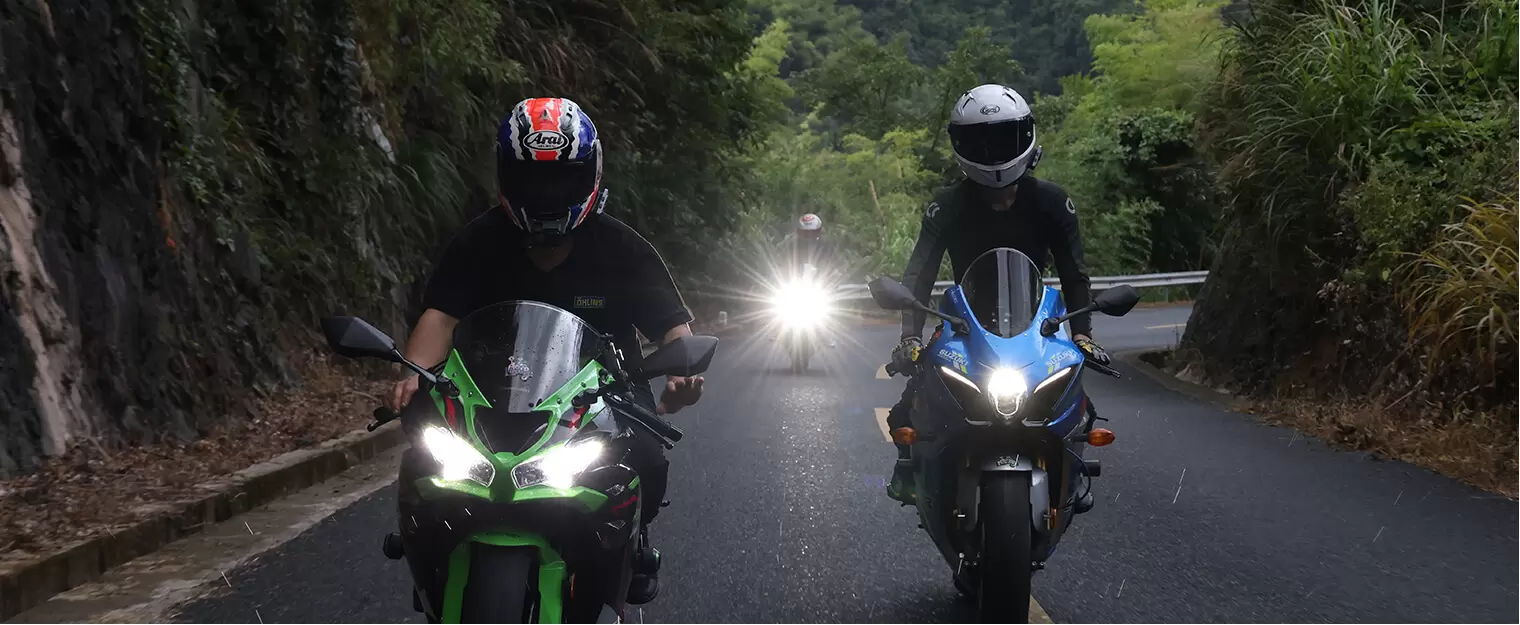
Motorcycle riding is no longer limited to long-distance touring or large group trips. In many markets, motorcycles have become part of everyday transportation, from commuting to work and running errands to short weekend rides.
At the same time, more couples and riding partners are choosing to ride together. Sometimes it is a short trip across the city. Sometimes it is a weekend coffee ride or a highway journey outside town. In these situations, communication between two riders can make the ride more convenient, but the communication requirements are often much simpler than those of a large touring group.
This raises an important question:
Do two riders really need a motorcycle intercom designed for six people?
For many everyday riders, the answer may be no.
Instead of looking for the maximum number of connected riders or the longest list of advanced features, couple riders may be more interested in stable two-person communication, clear voice transmission, practical wind-noise reduction, easy operation, sufficient battery life, and dependable performance during everyday riding.
This is where simple, purpose-oriented motorcycle intercoms can have a meaningful role in the market.

When people think about motorcycle communication, they may immediately picture a group of riders traveling together on a long-distance tour.
That is certainly one important use case.
However, motorcycle ownership and riding habits are becoming increasingly diverse. Many riders use motorcycles for daily commuting, short-distance transportation, leisure rides, and occasional weekend trips.
Couples can be an important part of this riding population.
Two partners may ride separate motorcycles to work, meet after work for dinner, or take a short ride together on the weekend. Friends and regular riding partners may have similar habits.
In these situations, communication does not necessarily need to involve a large group.
A rider may simply want to tell their partner:
“Let's take the next exit.”
“There is a gas station ahead.”
“Let's stop here for a break.”
“The traffic is getting heavier.”
“Let's meet at the next intersection.”
These are simple conversations, but communicating while riding can be considerably more convenient than relying on hand signals, stopping repeatedly, or making phone calls.
The demand is therefore not necessarily for a more complicated communication system.
It is for a system that works well for two people who regularly ride together.
The motorcycle intercom market has developed a wide range of products with increasingly advanced functions.
Some systems are designed for four, five, or six riders. Others offer extended communication ranges, multiple connection modes, group communication, and additional entertainment or connectivity functions.
For touring groups, these capabilities can be valuable.
But consider a couple who normally rides together.
If their typical riding scenario involves only two people, many multi-rider functions may never be used.
This does not mean that advanced motorcycle intercoms are unnecessary. Rather, it highlights a basic principle of product selection:
More features do not automatically mean a better fit.
For everyday two-rider communication, customers may place greater value on a few practical questions:
Is the connection stable?
Can both riders hear each other clearly?
How well does the headset handle wind noise?
Can it be operated easily with motorcycle gloves?
Is the battery sufficient for regular use?
Can it handle light rain and road splashes?
What happens if the two riders use different headset brands?
These factors can have a much more direct effect on the everyday riding experience.
A two-rider motorcycle intercom does not necessarily need to compete by offering every possible feature.
Instead, it should focus on the functions that matter most in the riding scenarios it is designed for.
For couples and regular riding partners, two-person communication is the starting point.
A full-duplex intercom allows riders to communicate naturally instead of taking turns transmitting messages.
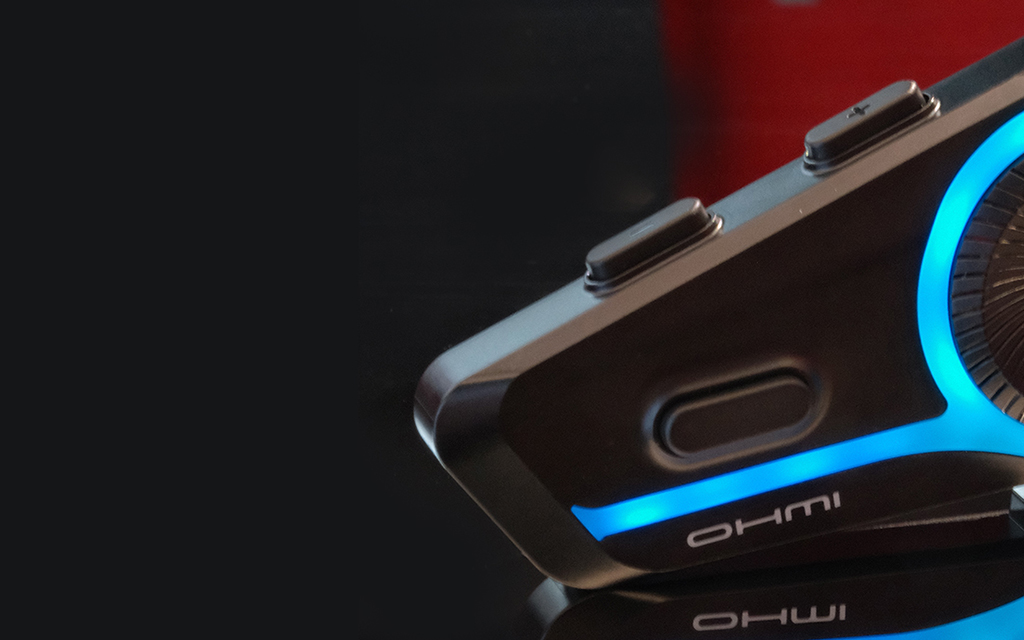
The OHMIEX C1 is designed around a two-rider full-duplex intercom configuration, making it suitable for riders whose typical communication needs are centered on one riding partner rather than a large group.
This focused positioning can also give motorcycle accessory distributors another option for customers who are specifically looking for a two-rider communication solution.
Motorcycle communication is fundamentally different from ordinary Bluetooth earphone use.
Once a rider starts moving, wind becomes a constant source of background noise. Helmet design, riding speed, road conditions, microphone placement, and airflow can all influence voice quality.
A headset may sound perfectly clear when tested indoors but perform very differently on an open road.
For this reason, wind-noise management is an important consideration when evaluating a motorcycle Bluetooth headset.
The OHMIEX C1 incorporates wind-noise suppression to help improve voice communication during riding. Its product specifications also indicate clear voice communication at speeds of up to 100 km/h under tested conditions.
Actual performance can vary according to helmet type, riding environment, speed, microphone positioning, and other conditions. However, designing around the acoustic challenges of motorcycle riding is an important part of creating a practical communication device.
Battery life is another consideration that becomes more important when a headset is used regularly.
For a daily commuter, constantly charging a headset can become inconvenient. For a couple taking a longer weekend ride, limited battery life can be even more noticeable.
The OHMIEX C1 is specified with up to 39 hours of intercom runtime. When intercom and music are used simultaneously, the stated runtime is up to 24 hours, while music playback can reach up to 36 hours under specified conditions.
Actual battery performance depends on factors such as volume, connection status, temperature, usage pattern, and other operating conditions.
Even so, the available battery capacity makes the C1 suitable for riders looking for a headset that can support both regular commuting and longer recreational rides without requiring frequent charging.
Couples and riding partners do not necessarily purchase their equipment at the same time.
One rider may already own a motorcycle intercom from another brand, while the other is looking for a new headset.
This creates a practical compatibility question:
Does both riders' equipment have to come from the same brand?
The OHMIEX C1 includes a cross-brand bridge function designed to support communication with compatible equipment from other brands.
For riders who already have a communication device, this can provide additional flexibility when choosing equipment for their partner.
Compatibility can vary depending on the specific devices and connection methods involved, so users should confirm compatibility before purchase. Nevertheless, cross-brand communication is a useful feature for a market where riders may build their equipment setup independently rather than purchasing a complete system at once.
For distributors, it can also reduce one potential barrier when introducing a new motorcycle Bluetooth headset to customers who already own communication equipment.

A motorcycle headset is operated in an environment where convenience is important.
Riders may be wearing gloves. They may be traveling through busy traffic. They may need to adjust audio or communicate with their partner without taking their attention away from the road.
For everyday riding, complicated controls can become a disadvantage.
The C1 takes a relatively straightforward approach to operation and installation. It supports voice assistant activation and includes practical control functions for communication and entertainment.
Its clip-on mounting design also allows installation without complicated tools, while interchangeable microphone options help accommodate different helmet configurations.
The C1 is designed to work with full-face, open-face, and 3/4 helmet configurations, giving riders greater flexibility when integrating the headset into their existing riding equipment.
These details may not always appear in headline specifications, but they can make a meaningful difference in everyday use.
Daily motorcycle riders cannot always choose the weather.
A morning commute may begin under clear skies and end with light rain. A weekend ride may encounter wet roads or occasional splashes from surrounding traffic.
For this reason, weather resistance is another practical consideration when selecting a motorcycle intercom.
The OHMIEX C1 features an IPX5 water-resistance rating, providing protection suitable for conditions such as light rain and road splashes.
This should not be interpreted as complete waterproofing. Riders should still follow the product's operating and care instructions and avoid exposing the device to conditions beyond its specified protection level.
For everyday commuters, however, a defined level of water resistance adds another layer of practicality to a motorcycle Bluetooth headset.
The value of a two-rider motorcycle intercom becomes clearer when looking at actual riding scenarios.
Two partners ride separate motorcycles to work.
They may need to communicate about traffic, route changes, parking, or unexpected situations.
A reliable two-rider intercom can make these short conversations easier without requiring either rider to stop.
Not every weekend ride is a 500-kilometer touring trip.
Sometimes the destination is simply a café, restaurant, scenic location, or nearby town.
For this kind of short recreational ride, a simple two-rider motorcycle intercom may provide everything the riders actually need.
A couple may begin their ride in city traffic and then move onto a highway.
As speed increases, wind noise becomes more noticeable, making microphone performance and voice clarity increasingly important.
This is where features such as wind-noise suppression become more relevant than simply having a Bluetooth connection.
A couple may also take a longer trip without joining a large motorcycle group.
In this situation, battery life becomes more important. A headset with extended intercom runtime can reduce the need to stop and recharge during the journey.
These examples demonstrate that the market for motorcycle communication is not limited to large riding groups.
There is also a clear use case for two-person motorcycle communication.
For distributors, wholesalers, and motorcycle accessory retailers, product positioning can be just as important as the specifications themselves.
Not every customer entering a motorcycle accessories store is looking for the most advanced intercom available.
Some customers have a much simpler requirement:
“I usually ride with my partner. We just want to talk while riding.”
If the available products are positioned primarily around large group communication, these customers may find it difficult to identify a solution that matches their actual needs.
A commuter-focused two-rider headset can fill a different position within a motorcycle accessory portfolio.
For example:
| Customer Type | Typical Communication Need |
|---|---|
| Daily commuter | Simple one-to-one communication |
| Couple / partner riders | Two-rider intercom |
| Weekend riders | Two-rider or small-group communication |
| Long-distance touring riders | Extended communication and advanced features |
| Large riding groups | Multi-rider intercom systems |
This type of segmentation allows distributors to recommend products according to actual riding behavior instead of simply comparing the number of supported riders.
It can also make product selection easier for customers who may not understand every technical specification of a motorcycle intercom.
The term “couple riders” describes an important scenario, but the opportunity is broader than couples alone.
The same two-rider communication requirements can apply to:
Friends who regularly ride together
Family members traveling on separate motorcycles
Riding partners
Commuters traveling together
Delivery or service riders working in pairs
Weekend recreational riders
In other words, the broader category is not simply couple riding.
It is two-person motorcycle communication.
That distinction is important for both product development and distribution strategy.
A customer may not describe themselves as a “couple rider,” but they may still be exactly the type of customer who benefits from a simple two-rider motorcycle intercom.
The motorcycle intercom market will continue to develop, and advanced multi-rider systems will remain valuable for touring groups and riders with more demanding communication requirements.
But there is another side to the market.
Many riders do not need every available function.
They need the functions that fit the way they actually ride.
For a couple commuting together, stable two-rider communication may be more important than six-rider connectivity.
For a weekend rider, long battery life may be more useful than a complicated communication configuration.
For a highway rider, effective wind-noise management may matter more than another feature added to a specification sheet.
And for someone who already owns another brand of headset, cross-brand communication can be more useful than replacing an entire communication setup.
This is where a focused motorcycle Bluetooth headset can create value.
The OHMIEX C1 follows this more focused product philosophy.
Rather than positioning the headset solely around the maximum number of riders it can support, the C1 emphasizes the needs of everyday two-rider communication.
Its feature set includes:
Two-rider full-duplex intercom
Bluetooth 5.3 connectivity
Wind-noise suppression
Clear voice communication at tested speeds up to 100 km/h
Up to 39 hours of intercom runtime
Up to 24 hours of intercom plus music use
Cross-brand bridge capability
40 mm Hi-Fi speakers
Voice assistant activation
IPX5 water resistance
Interchangeable microphone options
Tool-free clip-on installation
Compatibility with full-face, open-face, and 3/4 helmets
Together, these features are intended to address the practical requirements of riders who use motorcycles as part of everyday life.
The product is not positioned as a replacement for every type of motorcycle intercom.
Instead, it provides a focused option for riders whose communication needs are primarily centered on one riding partner.
The motorcycle intercom market does not have a single type of customer.
Some riders need advanced group communication.
Others simply want to talk to the person riding beside them.
Some spend weeks on long-distance tours.
Others ride 20 or 30 minutes to work every morning.
Some want every available connectivity feature.
Others prefer a headset that is straightforward to install, easy to operate, and focused on the functions they actually use.
That is why the question should not always be:
“How many riders can this motorcycle intercom support?”
A better question may be:
“How does this headset fit the way the customer actually rides?”
For couples, partner riders, and everyday commuters, a simple two-rider motorcycle intercom can be a practical alternative to feature-heavy systems designed primarily for large groups.
As motorcycle riding continues to expand into everyday commuting and recreational use, this segment deserves greater attention from both product developers and motorcycle accessory distributors.
The best motorcycle intercom is not necessarily the one with the most features.
It is the one with the right features for the riders who will actually use them.
If you sell motorcycle Bluetooth headsets in your market, it may be worth looking beyond large-group touring customers.
Are couples and two-person riding partners becoming a more noticeable part of your customer base?
Are customers asking for simple communication rather than a six-rider system?
If so, a commuter-focused two-rider headset could represent a useful addition to your product portfolio.
For distributors and wholesalers interested in the OHMIEX C1, contact the OHMIEX team to discuss product details, wholesale opportunities, and market cooperation.


 Email
Email WhatsApp