
 en
en
Information protection accompanying every step of life
Follow OHMIEX Intelligence for more valuable information to know early

Follow OHMIEX Intelligence for more valuable information to know early
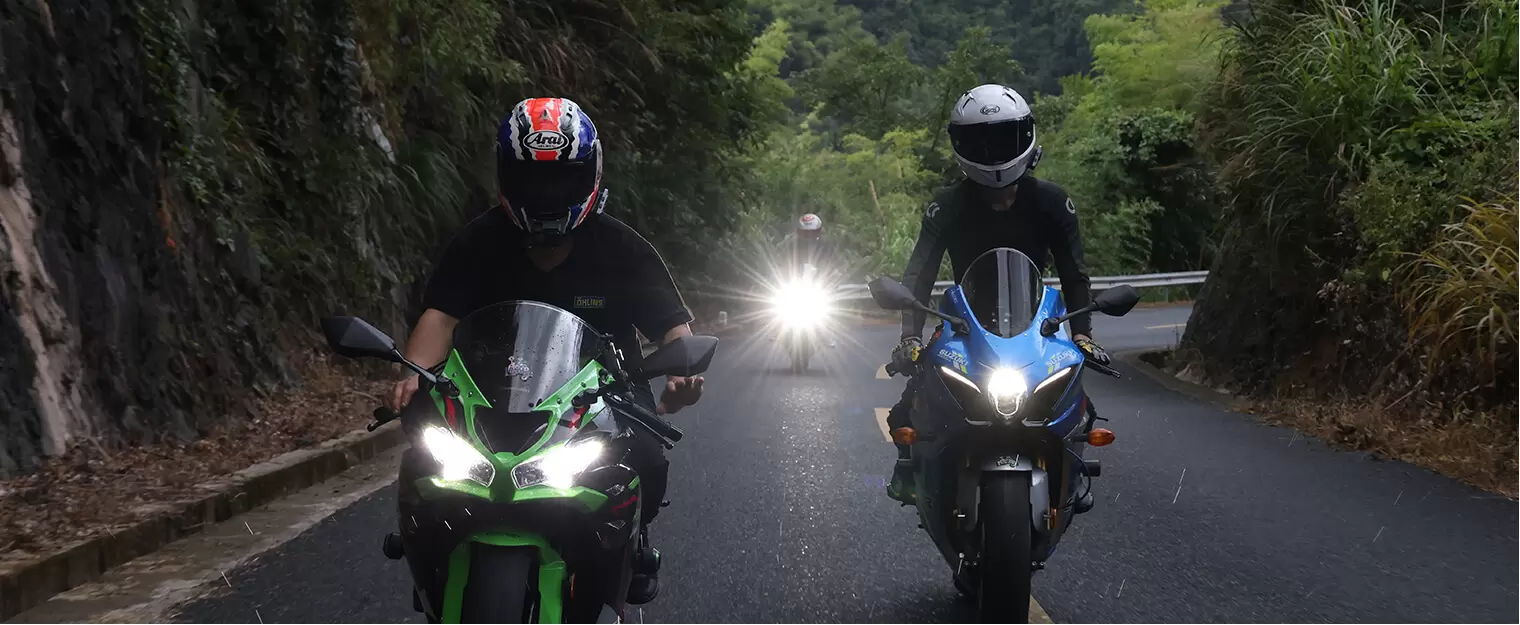
Choosing a motorcycle intercom is not simply a matter of comparing prices or selecting the model with the longest feature list. Different riders use communication headsets and motorcycle helmet intercoms in very different environments, and the right product depends on how, where, and with whom it will be used.
A rider commuting through a city every day may prioritize long battery life, comfortable installation, reliable two-rider communication, and practical smartphone functions. A rider participating in weekend group rides may have different requirements, while long-distance touring riders may place greater emphasis on multi-rider communication, communication range, weather resistance, noise reduction, and overall riding endurance.
For motorcycle intercom distributors and retailers, this difference is particularly important. A product that performs well for one customer segment may not necessarily be the most suitable choice for another. Understanding riding scenarios can therefore help businesses build a more effective motorcycle intercom product portfolio.
Many manufacturers design universal headsets that compromise performance across all usage scenes. OHMIEX adopts a differentiated R&D idea: instead of developing one headset to satisfy all riders, we tailor product functions to match distinct usage scenarios and customer core demands.

Daily commuting is the most mainstream motorcycle usage scenario, including work trips, delivery services, errands and short local rides, with changeable traffic and weather.
Core demands for motorcycle intercoms for daily commuting:
· Stable Bluetooth connection
· Clear full-duplex two-rider intercom
· Sufficient effective communication distance
· Ultra-long standby battery
· Tool-free helmet installation
· Smooth linkage with mobile phones (calls, navigation, music)
· IPX5 daily splash & light rain resistance
For distributors serving urban commuters and delivery riders, a two-rider motorcycle intercom with practical communication and long battery endurance can provide a focused solution for everyday users.
Weekend group travel usually contains multiple riders, who need to exchange route information, traffic alerts and rest plans at any time.
Distributors need to evaluate local market demand based on these questions:
Average number of riders for local group activities
Whether two-person riding or large team riding dominates
Main travel distance of group rides
Core purchase motivation: group talk or entertainment functions
Demand varies drastically across regions: some markets only need two-rider intercom, while areas with mature motorcycle clubs have strong demand for multi-person group mesh intercom.
For distributors targeting motorcycle intercom for group riding, understanding the typical group size and riding distance in the local market can help determine which product specifications are commercially relevant.
Long-distance cross-country riding puts forward higher comprehensive requirements for intercom devices. Apart from multi-rider talk and signal range, buyers also focus on endurance, wind noise suppression, high-level waterproofing and lightweight design.
Touring riders prefer integrated smart functions including voice control, APP parameter adjustment and ambient lighting to enrich long-distance riding experience.
For this customer segment, a motorcycle intercom for touring and adventure riding needs to balance communication capacity, endurance, audio performance, weather resistance and overall wearing comfort.
Most buyers will first compare the marked communication range, but nominal data cannot represent real road performance.
Mountains, curves, tall buildings, heavy traffic and rainy weather will all weaken signal stability. When screening intercom suppliers, distributors must evaluate range together with these dimensions:
· Maximum supported intercom riders
· Mesh / Bluetooth communication mode
· Microphone wind noise reduction effect
· Battery continuous working time
· Waterproof & dustproof grade
· Universal helmet installation structure
For distributors sourcing motorcycle intercom wholesale products, these specifications should be evaluated as a complete product system rather than as isolated numbers.
Daily commuters only need short-time battery support, while delivery riders and long-distance touring teams require all-day continuous use.
Different capacity designs correspond to different positioning: high-capacity batteries target daily frequent users, moderate-capacity batteries balance lightweight and endurance for group touring. Do not judge product quality only by battery capacity figures.
For a Bluetooth motorcycle intercom, battery endurance should always be considered together with communication functions, audio use, riding duration and the intended customer segment.
Intercoms are exposed to outdoor environments all year round, and different regions have different weather conditions:
Urban commuters (occasional light rain): IPX5 splash-proof meets daily needs
Cross-country adventure & long-distance touring riders: IPX7 full waterproofing is essential for sudden heavy rain and water splashes
Distributors can separate two waterproof tiers in their product portfolio to cover all local climate demands.
Highway wind noise, engine roar and surrounding traffic will seriously interfere with calls, navigation and music playback. Professional intercoms must equip targeted noise reduction solutions:
· Urban commuting models: basic wind suppression for daily road speeds
· Touring group models: professional ENC algorithm with high decibel noise reduction for high-speed riding
Hi-Fi speakers are a must-have configuration to guarantee clear voice broadcasting under noisy environments.
For buyers evaluating a Bluetooth helmet intercom, audio quality and noise reduction should be considered together with the riding environment and intended use.
No matter how complete the functions are, complex installation will increase store after-sales consultation and return rates.
Competitive wholesale motorcycle intercom products should adopt universal clip-on mounting, compatible with full-face, open-face and modular 3/4 helmets. Optional dual microphones (flexible boom mic + rigid stick mic) can match different helmet inner structures and improve customer experience.
Stores covering all types of riders need tiered product layouts instead of single universal models. We sorted mainstream rider groups and core purchasing demands into the table below:
| Rider Profile | Typical Use | Key Considerations |
|---|---|---|
| Daily commuter | City short-distance travel | Long battery life, simple two-rider talk, easy installation |
| Two-rider user | Partner riding | Reliable two-rider intercom, audio, compatibility |
| Weekend group rider | Short-distance team travel | Multi-rider mesh intercom and stable signal range |
| Long-distance touring rider | Cross-country multi-day travel | All-day endurance, communication capacity, noise reduction, water resistance |
| Adventure rider | Extended outdoor riding | Durability, weather resistance, communication and connected functions |
One single headset cannot satisfy all rider demands. Tiered products help distributors:
Cover low, medium and high customer budgets
Avoid homogeneous price competition with competitors
Improve retail unit price by matching targeted models for different buyers
Reduce product return rates caused by mismatched functions
For motorcycle intercom distributors, a multi-tier product strategy can also create clearer product positioning across different retail channels and customer groups.
Global motorcycle markets have huge differences in riding culture, traffic conditions and consumer preferences. Before selecting intercom product lines, wholesalers need to confirm 5 core local market conditions:
Core customer groups: commuters, delivery fleets, motorcycle clubs or touring enthusiasts
Main team riding scale: two-person pairs or large groups of 5+ riders
Local mainstream riding environment: urban roads, highways or mountain off-road routes
Dominant price range accepted by local consumers
Functions that local buyers care most about (battery, waterproof, group talk, APP control)
Based on the above information, distributors can select targeted product combinations instead of copying fixed global product lines.
For a motorcycle intercom supplier, understanding these market differences is also important when recommending suitable product configurations to international buyers.
Purchasing standard finished goods will inevitably face fierce price competition. Cooperating with manufacturers supporting OEM/ODM allows distributors to build differentiated exclusive product lines.
For distributors looking for a reliable motorcycle intercom manufacturer, working directly with an experienced motorcycle intercom OEM/ODM supplier can provide greater flexibility in product positioning, branding and market development.
Customizable cooperation items for B2B partners:
· Private brand logo printing on host & accessories
· Custom color boxes, user manuals and packaging design for regional markets
· Adjust product function configuration (turn on/off APP, RGB light, intercom quantity limit)
· New appearance structural ODM development for brand differentiated positioning
Before starting cooperation, manufacturers will confirm your target region, customer groups, order volume, channel type and branding demands to formulate exclusive product solutions.
For global distributors, this approach can support the development of a differentiated motorcycle intercom wholesale product line instead of relying entirely on standardized products.
After sorting out all scenario-based sourcing standards, OHMIEX launches two targeted intercom models to cover mainstream market demands of global distributors:
· Bluetooth 5.3, max 1000m two-rider full-duplex intercom
· Cross-brand bridge function to connect other brand headsets
· 40mm Hi-Fi speaker, dual optional microphones
· Clip-on tool-free installation, fits all common helmet types
· 1050mAh large battery: up to 39h intercom continuous use
· IPX5 splash-proof for daily city riding
Suitable for distributors whose market is dominated by commuters, delivery riders and couple two-rider customers.
As a two-rider motorcycle intercom, C1 provides distributors with a targeted product option for markets where practical daily communication is a major customer requirement.

· Bluetooth 5.4, support 6-way group mesh intercom within 1000m
· IPX7 full waterproof for heavy rain and off-road riding
· 35dB professional ENC noise reduction for high-speed highway
· Built-in voice control, dedicated APP for EQ, firmware upgrade and RGB light adjustment
· Compact 45g lightweight clip-on structure
Perfect for markets with large motorcycle clubs, cross-country touring and adventure rider groups.
For distributors targeting multi-rider motorcycle intercom applications, D9 provides a product option focused on group communication, long-distance riding and advanced connected functions.
Key point: C1 and D9 are not divided into "good or bad". They are designed for different rider segments, and distributors can mix two models to build a complete store product portfolio.

Prioritize local mainstream riding scenarios (commuting / group touring / off-road). Confirm core demands including intercom quantity, battery endurance, waterproof level and noise reduction, then compare hardware parameters.
No. Range must be matched with actual riding environment and customer groups. For urban two-rider commuters, stable signal within 1000m is sufficient; large touring teams need multi-rider mesh intercom together with long signal range.
Models with long battery life, simple two-rider talk, cross-brand pairing, IPX5 splash-proof and easy installation will have the lowest return rate in urban markets.
Multi-rider mesh intercom quantity, high-decibel wind noise reduction, IPX7 waterproof and all-day continuous battery life are core selling points for touring customers.
Different riders have completely different function demands and budgets. Tiered products can cover all local customer groups, reduce homogeneous competition and lift retail overall revenue.
Yes. We support private label logo, customized packaging, function adjustment and new model ODM development for global distributors, retailers and independent moto brands.
We offer flexible minimum order quantities for different cooperation modes; contact our sales team to get the latest MOQ policy according to your target market and customized demands.
Standard stock goods deliver within 7–15 days; OEM logo & packaging customized orders take 20–35 days, ODM new product development cycles depend on structural adjustment scope.
We provide unified factory warranty for bulk orders, and supply complete spare parts matching for overseas after-sales maintenance to reduce your inventory loss.
Yes. We support mixed batch orders of two models for distributors who want to test market demand before bulk customized cooperation.
There is no universal "best" motorcycle intercom applicable to all regions. Daily commuters pursue long standby and simple operation; touring groups need multi-person communication and high waterproof performance.
For motorcycle accessories distributors, importers, offline shop owners and independent riding brands planning to expand helmet intercom product lines, OHMIEX provides one-stop motorcycle intercom wholesale, OEM and ODM solutions tailored to regional market characteristics.
As an experienced motorcycle intercom manufacturer and OEM/ODM partner, OHMIEX works with global distributors to develop product combinations around specific rider groups, riding scenarios, channel requirements and market positioning.
Share your local rider groups, mainstream riding scenes, target price range and customization demands with our team, and we will match exclusive intercom product mix and quotation plans for your business growth.


 Email
Email WhatsApp