
 en
en
Information protection accompanying every step of life
Follow OHMIEX Intelligence for more valuable information to know early

Follow OHMIEX Intelligence for more valuable information to know early
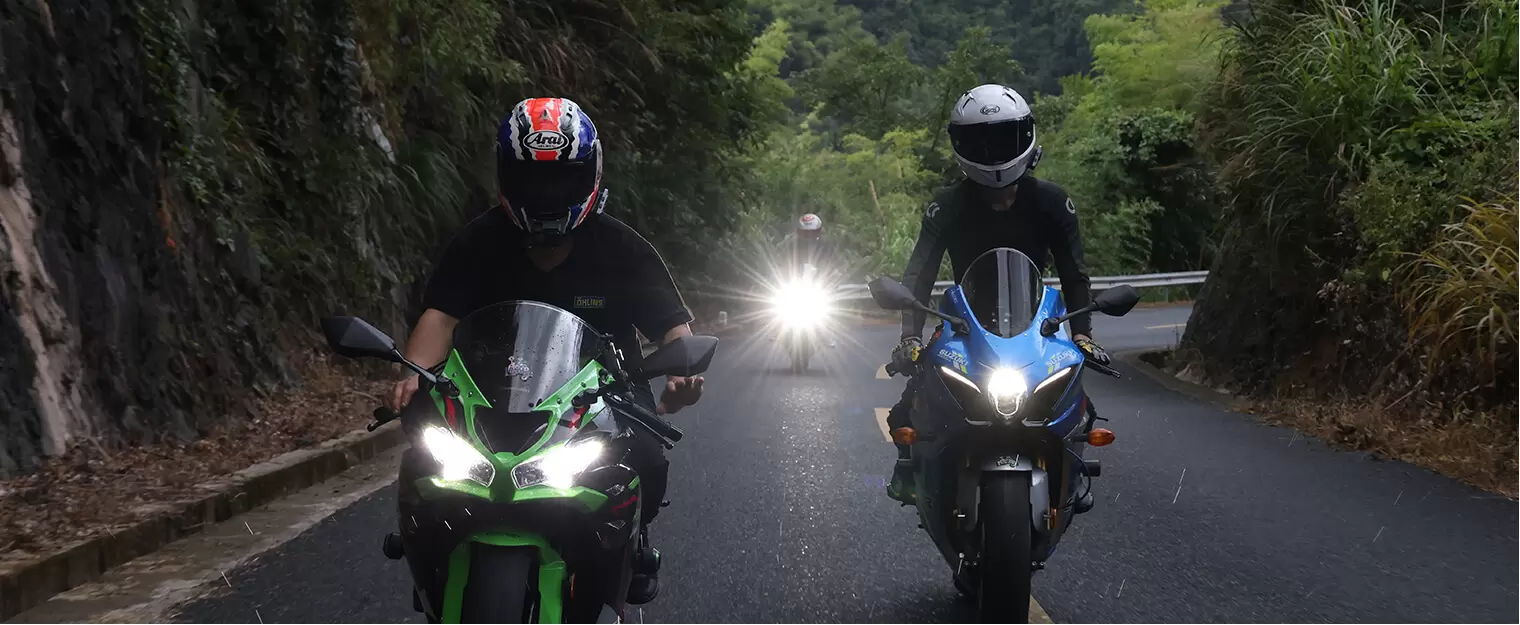
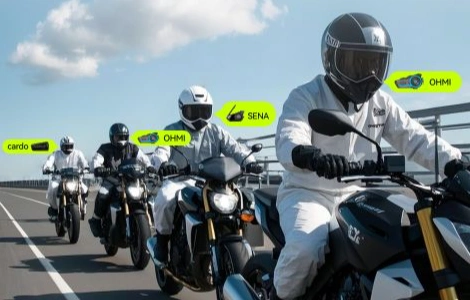
For many years, “reliability” in motorcycle communication systems was judged by a simple standard: can you hear the other rider? If the sound came through the speakers, the product was considered functional. But as riding environments become more diverse, group riding becomes more common, and motorcycles themselves evolve into smarter, more connected machines, that definition is no longer sufficient.
Today, reliability in motorcycle communication is being fundamentally redefined. It is no longer a single feature or specification. It is an integrated engineering outcome that must hold up under extreme speed, complex terrain, unpredictable weather, and long-term mechanical stress. At OHMIEX, we believe communication devices inside a helmet are not accessories—they are part of the rider’s safety infrastructure. This belief has reshaped how we design, test, and validate every product we build.
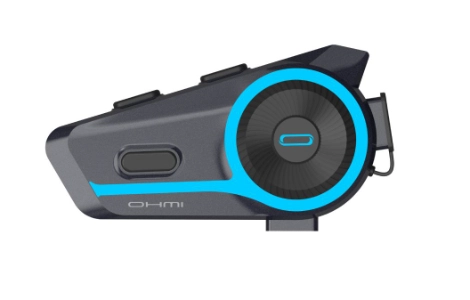
A modern motorcycle intercom must perform in situations where failure is not just inconvenient, but potentially dangerous. Riders rely on communication to coordinate maneuvers, warn of hazards, navigate unfamiliar routes, and maintain group cohesion when visibility is limited. In these moments, dropped connections, distorted audio, or delayed transmission can have real consequences.
This is why simply increasing volume, battery capacity, or advertised range does not equate to true reliability. Extreme environment reliability emerges only when hardware, software, and system architecture are designed together around real riding scenarios—not laboratory ideals.
At OHMIEX, we use what we call Scenario-Based Validation Engineering. Instead of starting with abstract performance targets, we begin with real-world riding situations that consistently challenge communication systems. Each core scenario becomes a design driver, influencing everything from antenna layout to firmware logic.
Many riders venture far beyond urban areas—into mountain passes, deep forests, desert highways, and canyon roads where mobile signals are weak or nonexistent. In these conditions, intercom systems must rely entirely on their own networking capability.
Our engineering focus here is not maximum theoretical distance, but connection resilience within small-to-medium riding groups. We prioritize:
Stable multi-device interconnection
Low-latency audio transmission
Dynamic signal adaptation in uneven terrain
The goal is to provide consistent, intelligible communication where traditional hand signals or visual cues fail due to distance, dust, fog, or terrain obstruction. Reliability, in this context, means that riders can trust the system even when external infrastructure disappears.
Wind noise is one of the most underestimated challenges in motorcycle communication. At high speeds, aerodynamic turbulence around helmets creates complex, non-linear noise patterns that change with posture, bike type, and wind direction.
To address this, OHMIEX has invested heavily in adaptive noise-canceling algorithms trained on large volumes of real riding data. Rather than relying solely on static filtering, our system continuously analyzes ambient sound and adjusts in real time.
This approach ensures that:
Speech remains clear without sounding artificial
Sudden wind bursts do not overwhelm the microphone
Rider voices are preserved even during aggressive acceleration
True reliability here means the rider does not need to consciously “fight” the system by shouting or repeating messages. Communication remains natural, even at highway speeds or in strong crosswinds.
Motorcycle communication devices are exposed to far harsher conditions than most consumer electronics. Rain, mud, dust, UV exposure, vibration, and rapid temperature changes are part of everyday riding, not edge cases.
From the earliest design stages, OHMIEX treats environmental resistance as non-negotiable. This includes:
IPX7-rated sealing structures to prevent water ingress
High-strength housing materials selected for impact and fatigue resistance
Connector and button designs tested for repeated mechanical stress
Beyond standard laboratory certifications such as CE and FCC, every product undergoes cyclic field testing—from high-altitude plateaus to prolonged heavy rain and extreme hot-and-cold temperature cycles. The objective is not just to pass tests, but to ensure consistent performance over the full service life of the device.
Industry certifications are essential, but they represent minimum thresholds. Passing them does not guarantee that a device will perform reliably after months or years of real riding.
For OHMIEX, reliability means:
Stable performance after repeated exposure to harsh environments
Predictable behavior under stress, not just ideal conditions
Long-term durability without degradation of audio or connectivity
A communication device inside a helmet functions as a critical node in the rider’s safety network. When riders depend on it to make decisions in motion, reliability becomes a matter of trust.
As motorcycle communication systems become more sophisticated, some of the most important design challenges are also the easiest to overlook. Based on our experience, true extreme-environment reliability often hinges on the balance between three core disciplines:
Materials science, which determines how well a device withstands vibration, impact, moisture, and aging
Protocol and connection stability, which governs how devices maintain links in dynamic, interference-prone environments
System-level power consumption and thermal management, which ensures consistent performance without overheating or sudden shutdowns
These elements cannot be optimized in isolation. A powerful processor is meaningless if thermal constraints throttle performance. A robust housing is ineffective if internal power management fails under load. Reliability is a system-level outcome.
The motorcycle communication industry is at a turning point. As riders demand more dependable, more intelligent systems, the definition of reliability must evolve beyond marketing claims and isolated specifications.
At OHMIEX, we believe the next generation of standards will be defined through collaboration between product specialists, engineers, and technology-focused partners—all grounded in real riding conditions. By sharing insights, data, and engineering discipline, the industry can move toward communication systems that riders trust instinctively, without hesitation.
Because when communication becomes part of rider safety, reliability is no longer optional—it is foundational.

Call to Action
If you believe motorcycle communication should be engineered as a safety-critical system—not just an accessory—OHMIEX invites you to connect with us. We are actively seeking partnerships with engineers, product specialists, and technology-driven brands who share a commitment to real-world reliability and rigorous scenario-based validation. Whether you are exploring advanced materials, communication protocols, or system-level power and thermal optimization, we welcome in-depth technical dialogue and joint development opportunities. Let’s work together to redefine reliability standards for motorcycle communication and deliver solutions riders can truly depend on, wherever the road leads.
Let’s collaborate to redefine reliability standards for motorcycle intercoms and deliver solutions riders trust—wherever the road leads. Reach out to our team today to start the conversation.

 Email
Email WhatsApp