en
en
Information protection accompanying every step of life
Follow OHMIEX Intelligence for more valuable information to know early

Follow OHMIEX Intelligence for more valuable information to know early
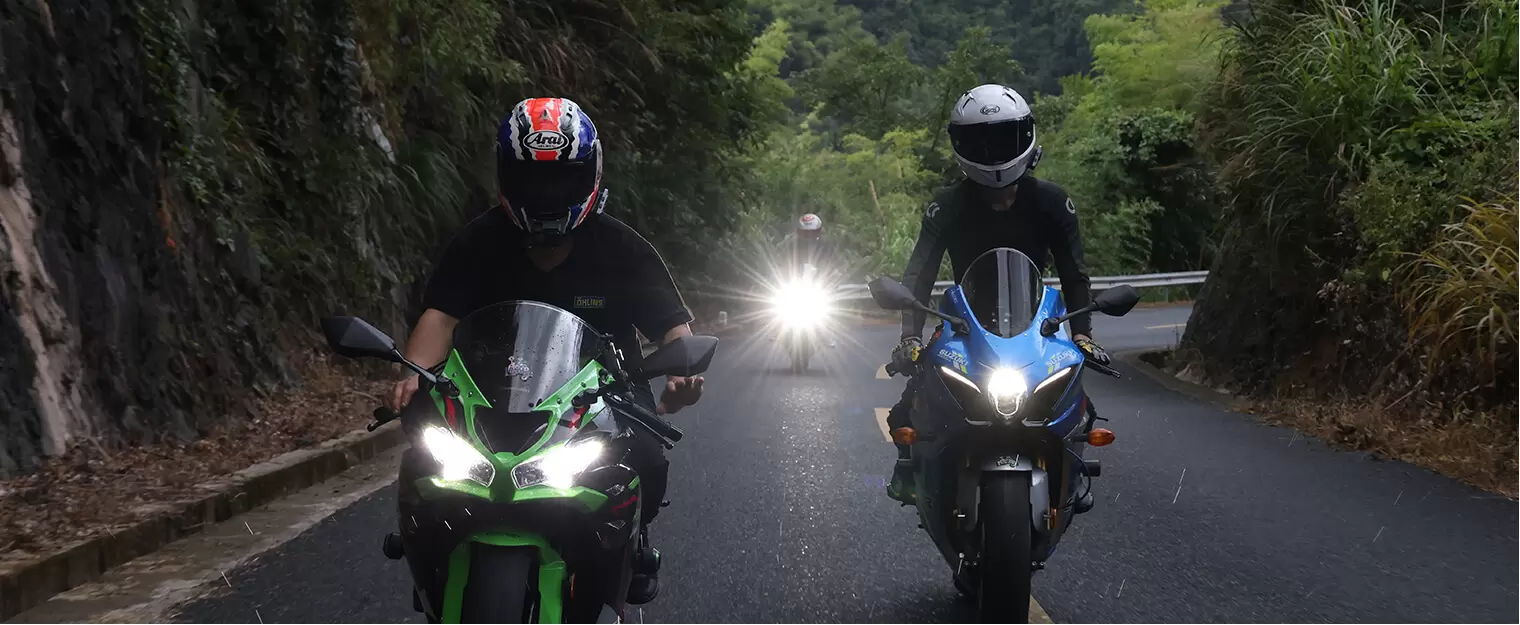
In the motorcycle gear industry, “reliability” is often treated as a marketing adjective—something implied by phrases like premium quality or professional-grade. Yet anyone who has spent time developing, sourcing, or deploying riding communication systems knows this word hides a far more complex reality. Reliability is not a single feature, nor is it the result of one strong specification on a datasheet. It is a system—one that must hold together under speed, weather, vibration, and long-term use.
In riding communication, the cost of failure is immediate and tangible. A dropped instruction on a mountain road, distorted audio in strong crosswinds, or unstable connections during group riding do not just affect user satisfaction; they directly influence safety, trust, and brand reputation. For this reason, reliability cannot be reduced to “good quality.” It must be engineered deliberately, tested continuously, and maintained across the entire product lifecycle.
At OHMIEX, we view reliability as a long-chain responsibility rather than a short-term achievement. It begins well before a product reaches a rider’s helmet and continues long after it leaves the factory.
In many product discussions, reliability is evaluated after launch—through warranty data, user feedback, or failure rates. In reality, the foundation of reliable riding communication is laid much earlier, at the architecture and component selection stage.
Chipsets, microphones, speakers, and wireless modules are not interchangeable commodities. Each choice affects signal stability, power management, thermal behavior, and long-term consistency. For example, a chipset that performs well in laboratory conditions may degrade noticeably when exposed to prolonged heat or voltage fluctuation. Similarly, microphone performance on a test bench tells very little about how it behaves inside a helmet at 100 km/h with turbulent airflow.
This is why early-stage engineering decisions carry disproportionate weight. Reliability is often lost not through dramatic design flaws, but through marginal choices made to optimize short-term cost or accelerate time-to-market.
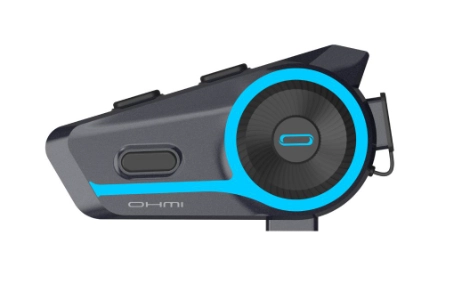
One of the most misunderstood aspects of riding communication reliability is noise cancellation. Too often, it is framed as a simple comparison of specifications or marketing claims. In practice, true noise cancellation is not a static function; it is an evolving algorithmic process.
Wind noise on a motorcycle is not uniform. It varies by helmet shape, riding posture, speed, weather, and road conditions. A system that performs acceptably in one environment may fail completely in another. Effective noise cancellation therefore depends on exposure to massive volumes of real-world data, collected across diverse riding scenarios.
At OHMIEX, algorithm development focuses on solving a specific, practical problem: how riders can hear navigation instructions or voice communication clearly at sustained high speeds. This requires repeated field testing, iterative tuning, and a willingness to refine solutions long after the hardware design is finalized. In this context, reliability is not about claiming the strongest noise reduction figure—it is about delivering consistent intelligibility when it matters.
In global markets, certifications such as FCC and CE are often treated as proof of product maturity. In reality, they are only entry requirements. Passing regulatory tests confirms compliance, not durability.
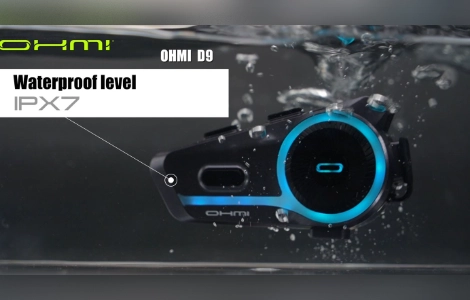
Professional-grade riding communication systems must endure conditions that exceed standard certification protocols. Long-term exposure to vibration, rapid temperature changes, high humidity, and altitude variation places stress on solder joints, connectors, batteries, and enclosures in ways that short-duration tests cannot fully simulate.
Reliability, therefore, depends on cyclic testing and environmental validation that reflect actual riding use rather than idealized laboratory conditions. Plateau testing, high-temperature aging, humidity cycling, and continuous vibration trials are not optional if long-term performance is the goal. They are the difference between a product that passes inspection and one that maintains performance over years of real-world use.
Technology alone does not create reliable products. Professionalism does.
In a B2B context, professionalism is expressed through consistency: consistent materials, consistent processes, and consistent decision-making even when shortcuts are tempting. It means refusing to substitute components without proper validation, maintaining traceability across the supply chain, and accepting longer development cycles when necessary to protect end-user experience.
This discipline is particularly important for brands and distributors operating in multiple regions. Variations in climate, riding culture, and regulatory expectations amplify the consequences of small inconsistencies. A product that performs reliably in one market but fails prematurely in another ultimately damages the brand everywhere.
For global brands and distributors, the value of a riding communication solution lies not only in its feature set, but in the experience it delivers repeatedly, across batches, seasons, and markets. This is where B2B collaboration differs fundamentally from one-off product sales.
When a supplier treats reliability as a system rather than a claim, it becomes a shared commitment. Design decisions, testing protocols, documentation standards, and after-sales support all contribute to the final perception of “professional-grade.”
At OHMIEX, this philosophy shapes how we work with partners. The goal is not to deliver a product that performs well at launch, but to support an experience that remains stable over time—because long-term reputation is built on what happens after the initial sale.
This brings us to a broader industry question: when we describe an accessory as “professional-grade,” what truly determines its long-term commercial success?
Is it supply chain traceability, ensuring that every component can be accounted for and consistently reproduced?
Is it design for maintainability, allowing products to be serviced, updated, or supported efficiently over time?
Or is it consistent performance in extreme environments, where real-world conditions expose weaknesses that specifications never reveal?
In practice, reliability emerges from the interaction of all these factors. It is not a single achievement, but an ongoing process of discipline, validation, and accountability.
As riding communication systems become more integral to modern motorcycling, the industry’s definition of reliability must mature as well. Beyond performance metrics and certification logos, the hidden standards—those that are difficult to market but essential to uphold—are what ultimately shape user trust and brand longevity.
We believe this conversation is worth having openly within the industry. Reliability deserves to be discussed not as a slogan, but as a system that reflects how seriously a company takes its responsibility to riders, partners, and the market as a whole.
Let’s Build Reliability That Lasts
If you are developing or sourcing riding communication products for demanding markets, reliability should never be an assumption—it should be a shared engineering goal.
At OHMIEX, we work closely with brands and distributors to translate real-world riding requirements into communication systems that perform consistently over time.
Whether you are evaluating a new project or reassessing an existing solution, we welcome a technical conversation on how reliability can be designed, tested, and sustained—together.
Contact us to discuss your next professional-grade riding communication solution.