
 en
en
Information protection accompanying every step of life
Follow OHMIEX Intelligence for more valuable information to know early
Follow OHMIEX Intelligence for more valuable information to know early
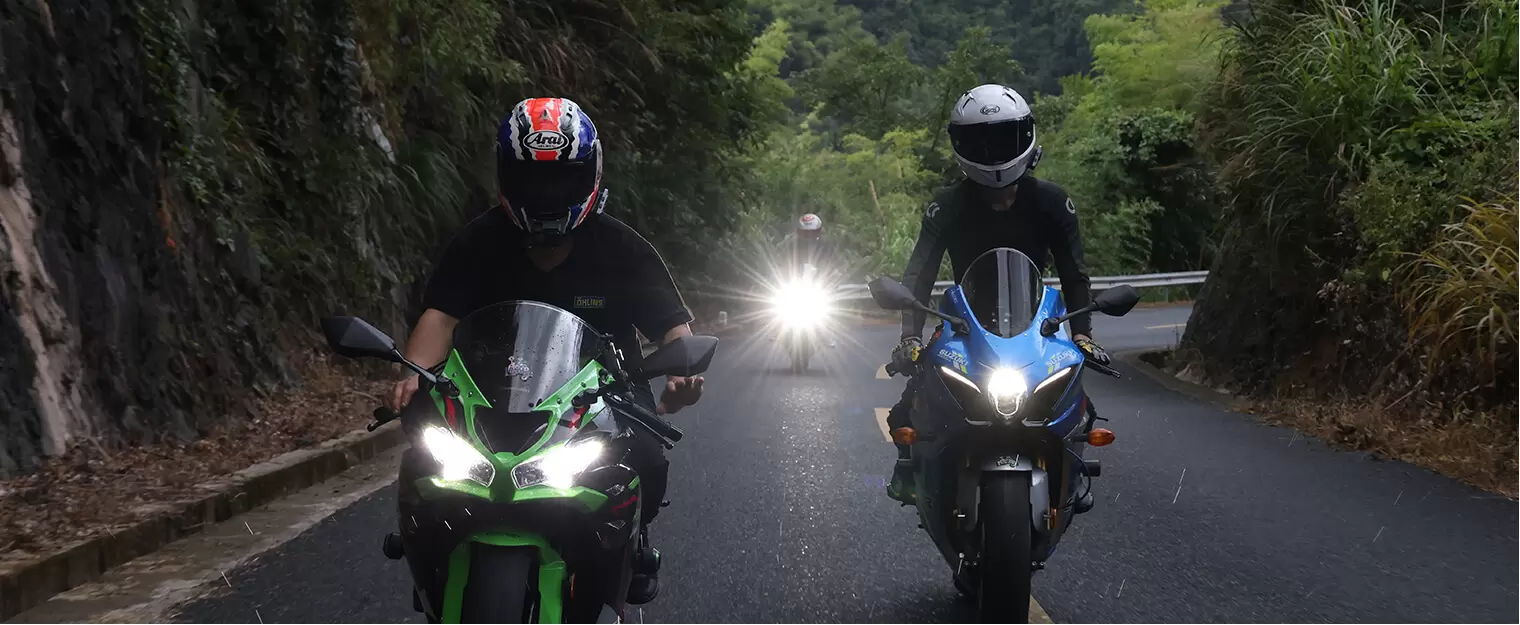
A helmet intercom can look impressive on a specification sheet and still deliver a very different experience on the road.
For motorcycle gear distributors and retailers, this gap matters. Communication range, battery life, and voice clarity are among the specifications customers pay attention to when choosing an intercom. When real-world performance does not match the expectations created by a product listing, dissatisfaction and avoidable returns can follow.
The problem is not necessarily inaccurate specifications. In many cases, it is the assumption that a specification measured under particular conditions will produce the same result in every riding environment.
This is the lab-spec trap.

Motorcycle intercoms are used in environments that are difficult to control.
A rider may travel through dense traffic in one market and open roads in another. Buildings, vehicles, mountain terrain, road layout, wind, and riding speed can all influence communication performance.
For this reason, a communication range should be viewed together with its test conditions.
Consider two riders using the same intercom model. On an open road with few obstacles, they may maintain communication over a relatively long distance. The same product may produce a shorter effective range when motorcycles, vehicles, buildings, or terrain interfere with the communication path.
The specification itself has not necessarily changed. The operating environment has.
For distributors, understanding this distinction is more useful than focusing only on the largest number printed on a product page.
Outdoor road testing adds another layer of information to standard product specifications.
Instead of asking only for a maximum communication range, distributors can look at:
Where was the product tested?
At what riding speed?
How many riders were connected?
Was the road open or heavily congested?
Were there buildings, vehicles, or terrain obstacles?
How was battery life measured?
Was communication tested while music or other functions were active?
These details help buyers understand what a product may deliver in different markets and riding scenarios.
They are also useful when training sales teams. Rather than presenting one communication distance as a universal guarantee, retailers can explain how actual performance may change according to the riding environment.
Outdoor testing of motorcycle intercoms demonstrates this difference clearly.
For example, the OHMIEX D9 is specified for a 1,000-meter six-way intercom range. In outdoor testing, the measured communication distance reached approximately 1.5 km under suitable road conditions.
However, the result was different in a high-traffic highway environment.
During testing in the Philippines, where motorcycle and vehicle traffic was relatively dense, the effective communication distance was approximately 700 meters. Under tested Indonesian road conditions, the effective distance reached approximately 1.5 km.
The comparison is useful because both results came from actual riding environments.
It shows why distributors should avoid treating a single maximum range figure as an absolute result for every market.
Environmental factors such as traffic, buildings, terrain, and other obstacles can have a direct impact on practical communication distance.
The same testing approach can be applied to intercoms designed for a different user group.
The OHMIEX C1 Smart Motorcycle Helmet Bluetooth Headset is positioned for daily riding and two-rider communication. Its official specifications include two-rider full-duplex intercom communication, a 500–1,000-meter effective communication range, Bluetooth 5.3, a 1050mAh battery, and IPX5 water resistance.
In outdoor testing, C1 achieved approximately 600 meters of communication distance. Testing at riding speeds of up to 100 km/h also showed good voice clarity.
Battery testing produced approximately 39 hours of intercom use and 24 hours when intercom and music were used together.
For distributors, these results provide a more practical reference when positioning the product for commuters, couples, and other two-rider applications.
For larger riding groups, the evaluation criteria are different.
The OHMIEX D9 Smart Helmet Bluetooth Headset supports 4–6 rider intercom communication and up to six connected devices. Its official specifications include Bluetooth 5.4, a 1,000mAh battery, IPX7 water resistance, and six-way intercom communication.
Outdoor testing recorded approximately 1.5 km of communication distance under suitable conditions.
The testing also covered different environments, including dense highway traffic in the Philippines and road conditions in Indonesia. In addition, testing in an open coastal environment reached riding speeds of approximately 160 km/h.
These results do not mean that every rider will experience the same distance or voice performance. Instead, they provide distributors with additional real-world reference points alongside the official specifications.
Battery specifications can create a similar expectation gap.
A simple statement such as "up to X hours" does not necessarily describe every usage scenario. Intercom-only operation and simultaneous intercom and music playback can place different demands on the battery.
C1 provides a straightforward example:
| Usage Mode | Outdoor Test Result |
|---|---|
| Intercom | Approx. 39 hours |
| Intercom + Music | Approx. 24 hours |
For buyers comparing suppliers, the important question is therefore not simply "How many hours does the battery last?"
It is "How was that battery life measured?"
A clear testing methodology makes specifications more useful for both distributors and end customers.
Communication quality also depends on riding conditions.
At higher speeds, wind noise becomes a more significant factor. Helmet design, microphone position, road conditions, surrounding traffic, and riding speed can all influence the perceived clarity of a conversation.
The C1 was tested at speeds of up to 100 km/h, with good call clarity during testing. The D9 was also tested in an open coastal environment at speeds of approximately 160 km/h.
These tests provide useful performance references, but they should not be interpreted as universal guarantees.
For a distributor, the value lies in knowing the conditions behind the result.
When evaluating motorcycle intercom suppliers, four questions can reveal much more than a specification sheet alone.
Ask where and how communication range and battery life were measured.
Voice communication that works well at low speeds may face different conditions at highway speeds.
Testing on highways, urban roads, mountain routes, and open roads can provide a more complete picture than a single controlled test.
A reliable supplier should be able to explain that traffic, terrain, buildings, obstacles, weather, helmet configuration, and other factors may affect actual performance.
This information helps distributors set more realistic expectations before the product reaches the end customer.
The C1 and D9 illustrate why motorcycle intercoms should be evaluated according to their intended application.
C1 focuses on practical two-rider communication for daily riding, with tested communication distance of approximately 600 meters and tested intercom endurance of approximately 39 hours.
D9 is oriented toward group riding, supporting 4–6 rider communication and up to six connected devices, with outdoor testing reaching approximately 1.5 km under suitable conditions.
The point is not to determine which product has the "best" number.
The more useful question is whether the product's capabilities match the riding scenario and market in which it will be sold.
For motorcycle gear distributors, choosing an intercom supplier is not only about comparing product specifications. It is also about finding a supplier that can provide clear product information, realistic performance references, and products suited to different riding scenarios.
This is where outdoor testing can support a better sourcing process.
OHMIEX provides motorcycle intercom solutions for different user requirements, including the C1 for daily two-rider communication and the D9 for 4–6 rider group communication. Outdoor testing across highways, urban roads, mountain routes, and open-road environments provides additional reference data alongside the official product specifications.
For distributors, this information can support more accurate product positioning in different markets.
OHMIEX works with motorcycle gear distributors, wholesalers, retailers, and other channel partners looking for motorcycle intercom products for their local markets.
Depending on the market and application, cooperation can include:
Selecting suitable intercom models for different customer groups
Product information and technical specifications for local sales teams
Wholesale sourcing for motorcycle communication products
Mixed-model orders for different riding scenarios
OEM/ODM and private-label cooperation
Flexible product solutions for different market requirements
Rather than relying on a single headline specification, distributors can discuss their target riding scenarios and market requirements with the supplier and select products based on actual application needs.
If you are sourcing motorcycle intercoms for wholesale or distribution, contact OHMIEX to discuss suitable models, order requirements, and cooperation options.
For motorcycle gear distributors, a specification sheet remains an important sourcing tool. But it should be the starting point rather than the entire evaluation.
Communication range needs to be considered alongside test environment. Battery life needs to be connected to usage mode. Voice clarity needs to be evaluated at realistic riding speeds. Group communication needs to be tested with the number of riders the product is intended to support.
Outdoor testing does not replace official specifications. It adds context to them.
For suppliers and distributors alike, that context makes it easier to communicate product capabilities accurately and avoid creating expectations that the product cannot consistently meet.
The key question is therefore not simply:
"What is the maximum range?"
It is:
"What does the product actually deliver under the conditions where my customers ride?"
For distributors looking to build a motorcycle intercom product line, the next step is to evaluate the right product for the right riding scenario—and work with a supplier that can provide clear specifications, practical test references, and flexible cooperation options.
Note: Outdoor test results are reference measurements obtained under specific test conditions. Actual communication distance, voice clarity, battery performance, and other operating results may vary depending on riding speed, traffic, terrain, obstacles, weather, helmet configuration, connected devices, and other environmental factors.


 Email
Email WhatsApp