
 en
en
Information protection accompanying every step of life
Follow OHMIEX Intelligence for more valuable information to know early

Follow OHMIEX Intelligence for more valuable information to know early
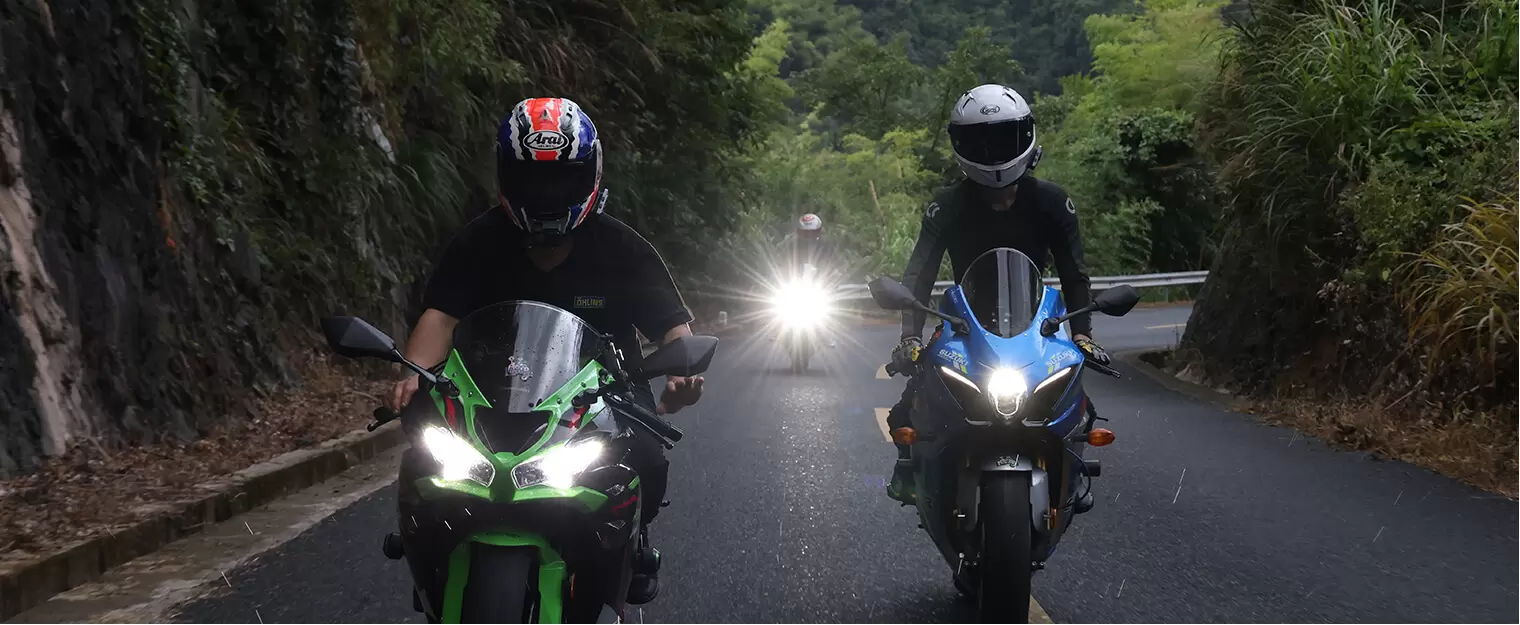
Motorcycle helmet communication technology has improved significantly in recent years. Modern Bluetooth headsets now offer Mesh networking, smartphone integration, voice assistants, and even AI-powered noise cancellation. However, despite these advancements, one challenge continues to frustrate riders around the world: wind noise.
Whether using an entry-level Bluetooth intercom or a premium communication system, riders frequently report reduced audio quality at higher speeds. Wind turbulence can interfere with both incoming audio and microphone performance, making conversations difficult and reducing the overall riding experience.
This article explores why wind noise remains such a persistent problem, how current technologies attempt to address it, and what future developments may finally provide a solution.
Wind noise is generated when fast-moving air flows around a rider's helmet, visor, and communication equipment.
As riding speed increases, airflow creates turbulence that produces a broad range of frequencies. These unwanted sounds can easily overwhelm speech signals and interfere with audio playback.
For motorcycle communication systems, wind noise creates two major problems:
Reduced speech clarity
Difficulty hearing intercom conversations
Lower music quality
Increased listening fatigue
Microphones capture wind turbulence
Speech becomes distorted
Other riders struggle to understand conversations
Voice commands become less accurate
Even high-quality speakers cannot fully compensate when wind noise exceeds comfortable listening levels.
Many riders notice that communication quality drops significantly once speeds exceed 80 km/h (50 mph).
The reason is simple: wind noise increases exponentially as speed rises.
| Riding Speed | Wind Noise Impact |
|---|---|
| Below 50 km/h | Minimal interference |
| 50–80 km/h | Noticeable background noise |
| 80–120 km/h | Significant communication challenges |
| Above 120 km/h | Severe audio degradation |
At highway speeds, several factors combine:
Aerodynamic turbulence around the helmet
Engine and exhaust noise
Road surface noise
Crosswinds
Vehicle traffic noise
As a result, riders often find themselves increasing volume levels, which may introduce additional listening fatigue during long journeys.
Many riders assume that communication quality depends entirely on the headset itself. In reality, helmet design plays an equally important role.
Factors that influence wind noise include:
Aerodynamically optimized helmets generate less turbulence.
Full-face helmets generally offer better noise isolation.
Modular helmets often allow more airflow around the chin area.
Open-face helmets typically experience the highest wind exposure.
Poor visor sealing can allow wind to enter the helmet and increase interior noise levels.
Even premium speakers perform poorly when positioned incorrectly relative to the rider's ears.
For this reason, a mid-range headset installed correctly inside a quiet helmet may outperform a premium headset mounted in a noisy helmet.
Artificial Intelligence has become one of the most heavily marketed features in modern motorcycle communication systems.
AI noise cancellation systems are designed to distinguish human speech from environmental noise.
The process generally involves:
Capturing audio through one or more microphones
Analyzing incoming sound patterns
Identifying speech frequencies
Suppressing non-speech sounds
Transmitting cleaner voice signals
Modern AI systems can adapt in real time to changing riding conditions.
Potential benefits include:
Improved microphone clarity
Better voice recognition
Reduced background noise transmission
Enhanced intercom communication
However, AI technology is not a perfect solution.
Strong wind turbulence remains one of the most difficult acoustic challenges for any communication device.
Manufacturers use several different approaches to combat wind noise.
ENC focuses on reducing surrounding environmental noise before audio is transmitted.
Advantages:
Improves microphone performance
Effective in urban riding conditions
Supports clearer voice communication
Limitations:
Less effective against extreme wind turbulence
DSP technology analyzes and modifies audio signals in real time.
Advantages:
Improves speech intelligibility
Reduces unwanted frequencies
Enhances overall sound quality
Limitations:
Processing effectiveness varies by software quality
Passive methods rely on physical design rather than electronic processing.
Examples include:
Aerodynamic helmet shells
Wind-resistant microphone covers
Improved visor sealing
Speaker positioning optimization
Advantages:
Always active
No battery consumption
Reliable in all conditions
Limitations:
Cannot eliminate noise entirely
Despite technological improvements, riders continue to report several recurring issues.
Strong airflow can overload microphone inputs, resulting in distorted speech.
Many users must increase volume levels significantly at highway speeds.
Wind noise can interfere with voice assistant recognition.
Long-term exposure to elevated volume levels can become uncomfortable during extended rides.
The same communication device often performs differently depending on helmet design.
These real-world issues explain why wind noise remains one of the most discussed topics in motorcycle communication communities.
Manufacturers are investing heavily in noise-reduction technologies.
Current development priorities include:
Using multiple microphones allows devices to compare sound sources and isolate speech more effectively.
Machine learning models continue to improve speech recognition accuracy.
Enhanced speaker drivers help improve clarity without excessive volume.
Strategic microphone positioning can significantly reduce wind exposure.
Integrated communication systems allow manufacturers to optimize acoustic performance during helmet design rather than after installation.
The next generation of motorcycle communication systems is expected to focus heavily on acoustic performance.
Emerging technologies include:
Future systems may automatically adjust audio settings based on:
Riding speed
Wind intensity
Traffic conditions
Riders may be able to create customized noise-reduction settings for different environments.
Integrated smart helmets could combine:
Noise sensors
AI processors
Advanced speaker systems
These systems focus on the rider's voice while rejecting surrounding noise more effectively.
To address the persistent challenge of wind noise in motorcycle communication systems, OHMI has developed an upgraded ENC (Environmental Noise Cancellation) solution specifically optimized for high-speed riding conditions.
Unlike conventional single-microphone noise reduction systems, OHMI’s upgraded ENC architecture is designed with a multi-layer audio processing approach. This allows the system to better distinguish between human voice frequencies and complex aerodynamic noise generated at highway speeds.
Key improvements include:
Enhanced dual-microphone directional pickup to isolate rider voice from surrounding turbulence
Adaptive ENC algorithm that dynamically adjusts based on riding speed and wind intensity
Optimized wind-resistant microphone housing to reduce direct airflow interference
Improved DSP tuning for clearer mid-to-high frequency voice transmission
Low-latency processing to ensure real-time communication in group riding scenarios
By combining hardware design improvements with intelligent audio processing, OHMI’s solution significantly improves speech clarity during high-speed riding conditions, where traditional Bluetooth headsets typically experience severe degradation.
This integrated approach allows riders to maintain stable and intelligible communication even in challenging environments such as highway cruising, crosswind exposure, and long-distance touring.
As wind noise remains one of the most critical limitations in motorcycle communication technology, next-generation ENC systems like OHMI’s represent a key direction for improving real-world user experience beyond standard marketing specifications.
Wind noise remains the single biggest obstacle to achieving perfect motorcycle communication.
While Bluetooth technology, Mesh networking, AI noise cancellation, and DSP processing have all improved dramatically, the fundamental challenge of high-speed airflow continues to affect audio performance.
The most effective solution is rarely a single technology. Instead, the best communication experience usually comes from combining:
A well-designed helmet
Proper speaker installation
Advanced noise-reduction software
High-quality microphones
Effective aerodynamic design
As manufacturers continue to invest in AI and acoustic engineering, riders can expect meaningful improvements in the coming years. However, for now, wind noise remains the defining challenge that every motorcycle headset manufacturer is trying to solve.


 Email
Email WhatsApp