
 en
en
Information protection accompanying every step of life
Follow OHMIEX Intelligence for more valuable information to know early

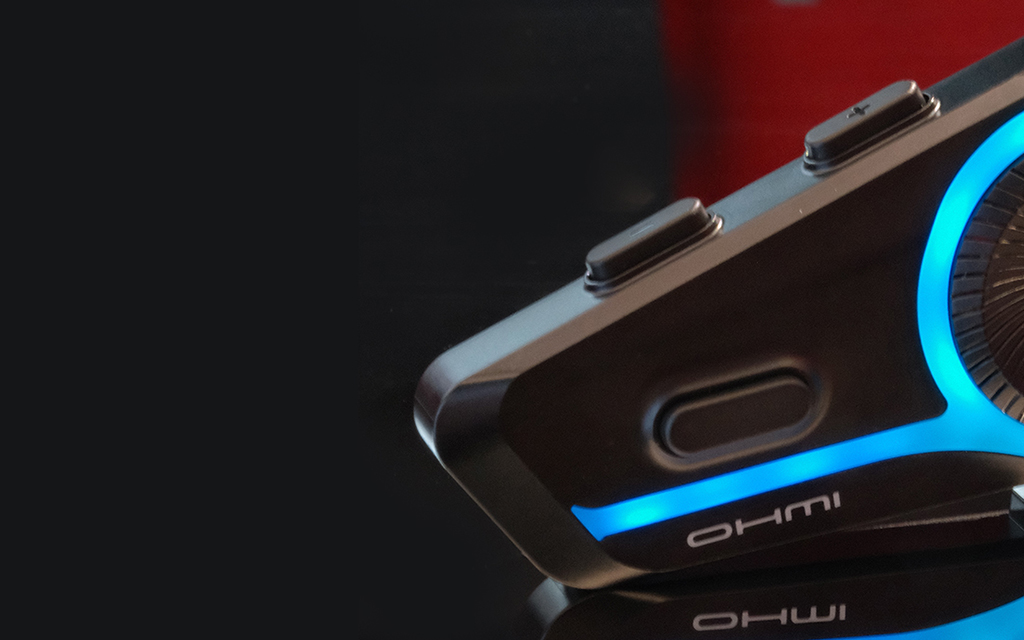
Follow OHMIEX Intelligence for more valuable information to know early

In the global motorcycle accessories market, product selection has become increasingly complex for distributors, wholesalers, and retail chains. The demand for a low-latency helmet Bluetooth headset is rising steadily, driven by riders’ expectations for seamless communication, safety, and reliability at high speeds.
However, for B2B buyers, the challenge is not identifying demand—it is sourcing products that consistently deliver in real-world conditions while maintaining stable margins and supply continuity.
With over eight years of industry experience and partnerships spanning more than 50 countries, we have observed a consistent pattern: many procurement decisions fail not because of poor intent, but because of misaligned priorities. This article provides a grounded, business-focused perspective on how to evaluate and source the right low-latency helmet Bluetooth headset, and how OEM/ODM collaboration can create long-term competitive advantage.

The helmet communication device market is saturated with products that appear competitive on paper. Latency figures, battery capacity, and feature lists are often presented in ways that are difficult to verify under real riding conditions.
For B2B buyers, this creates two common sourcing traps:
Choosing the lowest-priced option often leads to hidden operational costs:
Bluetooth instability across different helmet types and mobile devices
Excessive wind noise at speeds above 80–100 km/h
High return rates due to inconsistent performance
Increased after-sales workload and customer dissatisfaction
While the initial purchase price is low, the total cost of ownership rises sharply.
On the other end of the spectrum, many products marketed as high-end fail to meet expectations:
Claimed low-latency performance not validated in real-world environments
Inflated battery specifications that degrade quickly
Unstable supply chains causing missed sales cycles
Lack of proper certifications leading to customs delays
For distributors, this translates into lost revenue opportunities and reputational risk.
Latency is not just a technical parameter—it directly impacts rider experience and safety.
A true low-latency helmet Bluetooth headset ensures:
Real-time communication between riders in group intercom scenarios
Minimal delay in navigation voice prompts
Seamless music playback without audio lag
Immediate response during emergency communication
In high-speed environments, even minor delays can disrupt coordination and reduce user confidence. Therefore, low latency must be engineered into both hardware and firmware—not simply claimed.
When sourcing a low-latency helmet Bluetooth headset, decision-makers should prioritize the following operational metrics rather than marketing claims:
Reliable suppliers implement standardized testing processes:
Batch-level aging tests (e.g., 72-hour continuous operation validation)
Strict defect rate control below industry benchmarks
Component traceability across production cycles
Consistency ensures that each shipment performs identically, reducing return rates and after-sales costs.
Global distribution requires full compliance with international standards:
FCC for North America
CE for European markets
RoHS for environmental safety
BQB for Bluetooth protocol compliance
Incomplete documentation can lead to customs clearance issues and shipment delays.
A strong manufacturing partner must demonstrate:
Scalable monthly production capacity
Predictable lead times
Flexible batch ordering for market testing
Rapid replenishment cycles
This is particularly critical for seasonal demand spikes and promotional campaigns.
The most successful products are not those with the most features, but those that solve real rider pain points:
Clear communication at high speeds
Long battery life for extended rides
Reliable waterproofing for all-weather use
Simple, intuitive operation
Products that align with user expectations generate organic demand and repeat purchases.

For B2B buyers seeking differentiation, OEM/ODM collaboration is no longer optional—it is a strategic necessity.
OEM/ODM partnerships allow buyers to:
Customize branding and packaging
Adjust feature sets based on regional preferences
Optimize price-performance ratios for specific market segments
Develop exclusive product lines that reduce direct competition
Working directly with a factory reduces layers in the supply chain:
Shorter development cycles
Direct communication with engineering teams
Faster iteration based on market feedback
Eliminating intermediaries improves margin structure:
More competitive pricing
Better control over production costs
Improved profitability across distribution channels
The OHMIEX D9 low-latency helmet Bluetooth headset was developed specifically to address the challenges outlined above.
Monthly production capacity exceeding 200,000 units
72-hour aging test applied to every batch
Defect rate controlled below 0.3%
These metrics ensure consistent product performance and minimize after-sales risk.
Full FCC, CE, RoHS, and BQB certifications
Streamlined customs clearance for international shipments
Compliance-ready documentation for distributors
Ultra-low latency communication optimized for group riding
Wind noise suppression engineered for high-speed environments
Up to 340 hours standby time for extended usage
IPX7 waterproof rating for all-weather reliability
These features are not theoretical—they are validated through real-world usage scenarios.
Direct factory pricing enabling 15–25% higher margins compared to similar products
Support for small-batch trial orders to reduce entry risk
15-day replenishment cycle to maintain inventory flow
This structure supports both market testing and scalable growth.
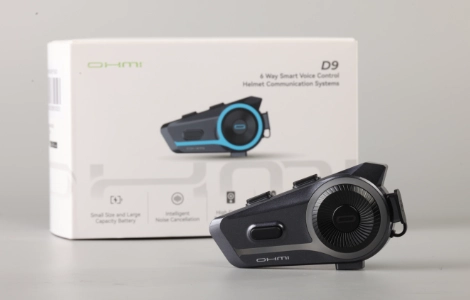
Successful B2B sourcing is not transactional—it is collaborative.
At OHMIEX, our OEM/ODM cooperation model is designed to align with distributor objectives:
We work closely with partners to understand:
Target market characteristics
Price positioning strategy
Key performance expectations
Based on requirements, we provide:
Customized feature sets
Branding and packaging solutions
Sample units for validation
Small-batch production for initial testing
Data-driven adjustments based on sales performance
Stable mass production
Continuous quality monitoring
Responsive after-sales and technical support
This structured approach reduces risk and accelerates market success.
In the helmet Bluetooth headset category, the difference between success and failure often comes down to supplier selection.
A reliable partner should offer:
Engineering-driven product development
Transparent quality control processes
Scalable and stable supply capabilities
Flexible OEM/ODM cooperation models
Clear focus on B2B profitability
The goal is not simply to source a product, but to build a supply chain that supports sustainable growth.
The demand for low-latency helmet Bluetooth headsets will continue to grow as riders prioritize communication quality and safety. For B2B buyers, the opportunity is significant—but only if sourcing decisions are grounded in operational reality.
Instead of focusing on specifications alone, prioritize:
Real-world performance
Supply chain reliability
Margin sustainability
Customization potential
The OHMIEX D9 is designed with these priorities in mind, offering a balanced solution for distributors seeking dependable products and scalable business outcomes.
If you are currently evaluating suppliers or facing challenges in sourcing helmet communication devices, a direct discussion can clarify next steps.
Whether your priority is improving product quality, stabilizing supply, or increasing margins, our team is prepared to provide tailored OEM/ODM solutions aligned with your market strategy.
Contact us to explore how a low-latency helmet Bluetooth headset can become a reliable driver of your business growth.


 Email
Email WhatsApp